Classic Inca Trail 4 Days Itinerary
You will probably wake up in Cusco around 4:30 AM to the sound of a rattling minibus outside your door. The city streets are black, quiet, and bitterly cold at that hour, and you will wonder why you paid good money to drag yourself out of a warm bed. By 9:00 AM, though, you are standing at Kilometer 82 beside the roaring Urubamba River, watching porters hoist impossible loads wrapped in blue tarps while someone inspects your passport against your trail permit. Setting off on a classic inca trail 4 days itinerary feels less like starting a standard hike and more like stepping onto a living, breathing pilgrimage that people have walked for over five hundred years.
Most hikers cover roughly 26 miles across four very distinct days. You climb out of the dry cactus valleys, cross a brutal high-altitude mountain pass, drop down into lush, dripping cloud forests, and end up staring through the Sun Gate at Machu Picchu. Along the way, you sleep in freezing mountain camps, eat surprisingly elaborate three-course hot meals cooked in tiny canvas tents, and contend with thousands of stone steps that will make your calves burn for days afterward. This day-by-day breakdown walks you through the exact reality of the route, minus the sugarcoating.
Day 1: Kilometer 82 to Ayapata on the Classic Inca Trail 4 Day
The trail starts quietly at Piscacucho, right at railway Kilometer 82. The first two hours feel like a gentle handshake. The path rolls along the banks of the river, dusty and relatively wide, passing small clusters of mud-brick houses where local families sell water bottles and Gatorade out of plastic tubs. You get your first view of Patallacta, an ancient agricultural settlement terraced into a steep canyon wall far below the trail. Seeing those stone walls against the green hills stops everyone in their tracks. It is your first real reminder that this trail was built for purpose, connecting administrative hubs across the mountains rather than just wandering around scenic viewpoints.
Lunch usually happens around the four-hour mark in a riverside village called Miskay. You take off your boots, sit on folding stools under a communal dining tent, and watch your trekking crew assemble warm quinoa soup and sautéed trout out of nowhere. It feels like an absurd luxury considering the remote location. Afterward, the trail begins to reveal its teeth. The afternoon climb heads into the Cusichaca valley toward the community of Wayllabamba.
Pro tip: Pick up a wooden walking stick from the vendors outside the checkpoint at Kilometer 82 for about 10 soles. Even if you have fancy carbon poles, having a cheap spare pole lets you brace hard against the stone descents without worrying about snapping expensive gear.
While older routes used to camp right at Wayllabamba, nearly every reputable modern guide will push you two hours further up the hill to Ayapata, sitting around 3,300 meters. Honestly, those last two hours hurt. You are tired, the gradient stiffens dramatically, and the air starts getting cold as the sun ducks behind the ridgeline. Pushing to Ayapata makes tomorrow infinitely better, because you have already shaved 300 vertical meters off the hardest climb of the entire trek. You crawl into your tent, listen to the creek nearby, and fall asleep early.
Book your cusco inca trail experience:
Day 2: Dead Woman's Pass and the High Ridge
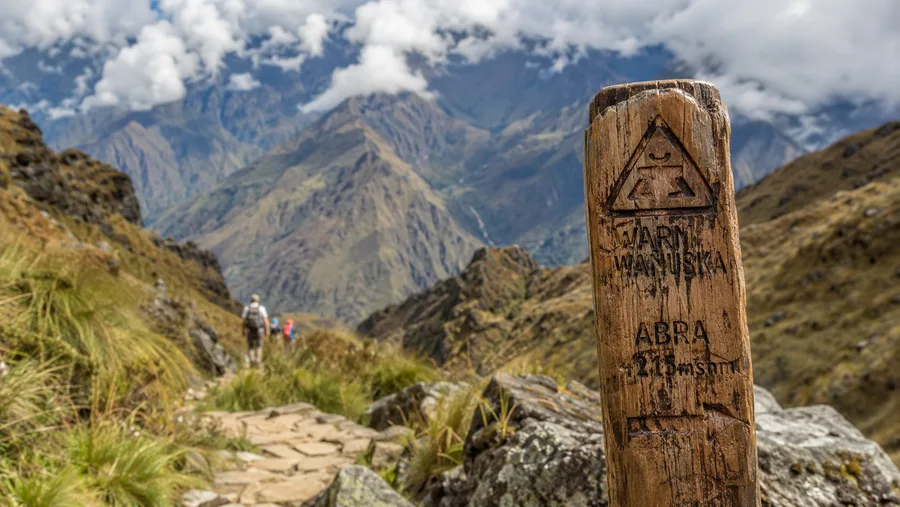
Someone taps on your tent canvas at 5:00 AM with a cup of hot coca tea. Day two of the 4 day inca trail hike is the one everyone worries about, and they are right to worry. From Ayapata, you climb almost straight up toward Warmiwañusqa, universally known as Dead Woman's Pass. The pass sits at 4,215 meters above sea level, making it the undisputed highest point on the Inca Trail. You gain almost a vertical kilometer over the course of four or five agonizing miles.
The landscape changes completely as you hike. You leave behind the scrubby trees and enter the wet dwarf forest of Llulluchapampa, where moss clings to crooked branches and tiny hummingbirds flit through the cold drizzle. Then the trees disappear entirely. You emerge onto open, wind-blasted grassland known as the puna. The pass sits directly ahead of you like a notched saddle between two peaks. It looks deceptively close, but every twenty paces leaves you gasping for oxygen. I think the mental struggle here is actually tougher than the physical one; you see tiny, colorful dots of other hikers far above you and realize just how much stone staircase remains.
Reaching the pass is pure relief. The wind usually whips across the ridge at freezing temperatures, so you take your quick summit photos, zip up your windbreaker, and start down. The descent into the Pacaymayo valley is a relentless, knee-jarring drop down two thousand slick granite steps. Many hikers find going down far worse than going up. Your quadriceps shake, your balance wavers, and by the time you reach the lunch spot at Pacaymayo around 1:30 PM, your legs feel like wet cardboard.
Note: Altitude sickness does not care how many marathons you have run back home. If you start getting a throbbing headache behind your eyes or feel intense nausea above Llulluchapampa, tell your guide immediately instead of trying to tough it out.
Depending on your operator's schedule, you might camp at Pacaymayo or tackle a second, shorter pass up to Chaquicocha. If your guide tells you that you are pushing on to Chaquicocha, do not despair. The second climb takes you past the circular ruins of Runkurakay, and ending the day at Chaquicocha sets up a very easy, peaceful morning for day three.
Day 3: Cloud Forest, Stone Tunnels, and Wiñay Wayna
Day three is the reason people fall in love with the classic inca trail 4 days route. If day two is about brute endurance, day three is about wonder. You spend almost the entire day walking along original Inca stonework that remains completely intact after five centuries. The trail clings to the contours of sheer cliffs, passing through hand-carved rock tunnels where you have to duck your head to squeeze through the narrow openings.
You begin with a steady walk to Sayacmarca, an incredible fortress perched on a cliff-edge promontory accessible only by a razor-thin single staircase. The clouds usually roll up from the Amazon basin below, swallowing the stone ruins in white fog before clearing out twenty seconds later to reveal massive green valleys dropping thousands of feet into nothingness. It feels entirely disconnected from the modern world. You do not need to read an academic history book to understand how hard the Inca Trail is to build, because the physical retaining walls holding the mountain in place speak for themselves.
After Sayacmarca, the path crosses Phuyupatamarca, which translates poetically to the "Town in the Clouds." The masonry here is exquisite, featuring ceremonial stone baths fed by underground spring water that still runs clear through ancient channels. Walking through this stretch requires deliberate concentration, especially when moisture coats the stone paths.
- Pace your footwork: The steps between Phuyupatamarca and Wiñay Wayna are nicknamed the Gringo Killer stairs for a reason; take them sideways to save your knees.
- Keep camera batteries warm: Cloud moisture and dropping temperatures will drain phone batteries within three hours if kept in an outer pocket.
- Watch for orchids: Over 300 native species bloom along this specific forest corridor, especially around the small streams crossing the path.
- Yield to porters: When you hear the rhythmic jingle of metal cups on a runner's pack, step immediately toward the mountain wall, never toward the cliff edge.
By late afternoon, you arrive at Wiñay Wayna, the final campsite. Just five minutes from the tents lies the archeological site of the same name, a breathtaking sweep of agricultural terraces curved around a natural amphitheater on the mountain flank. Very few day tourists ever see Wiñay Wayna because it can only be reached on foot. Sitting on the upper terraces watching the sun set over the Urubamba valley is, for my money, the single best moment of the entire four days.
Book your cusco inca trail experience:
Day 4: The Sun Gate and Entering Machu Picchu
Day four starts absurdly early. The camp alarm sounds around 3:15 AM because the local trail rangers need to clear the campsites and the porters must catch the early supply train back to the Sacred Valley. You eat a hurried breakfast by headlamp, hand off your duffel bags, and walk down to the control checkpoint by 4:00 AM, where you wait in the dark until the gate opens at 5:30 AM.
Once the gate opens, everyone walks at a brisk pace along the contour path toward Inti Punku, the Sun Gate. The trail here is relatively flat and winds through thick, lush jungle foliage. Right before the Sun Gate, you encounter a near-vertical staircase of about fifty stone steps known as the "monkey steps." Hikers drop their poles, grab the rocks with both hands, and scramble up on all fours. It is the final physical barrier of the trek.
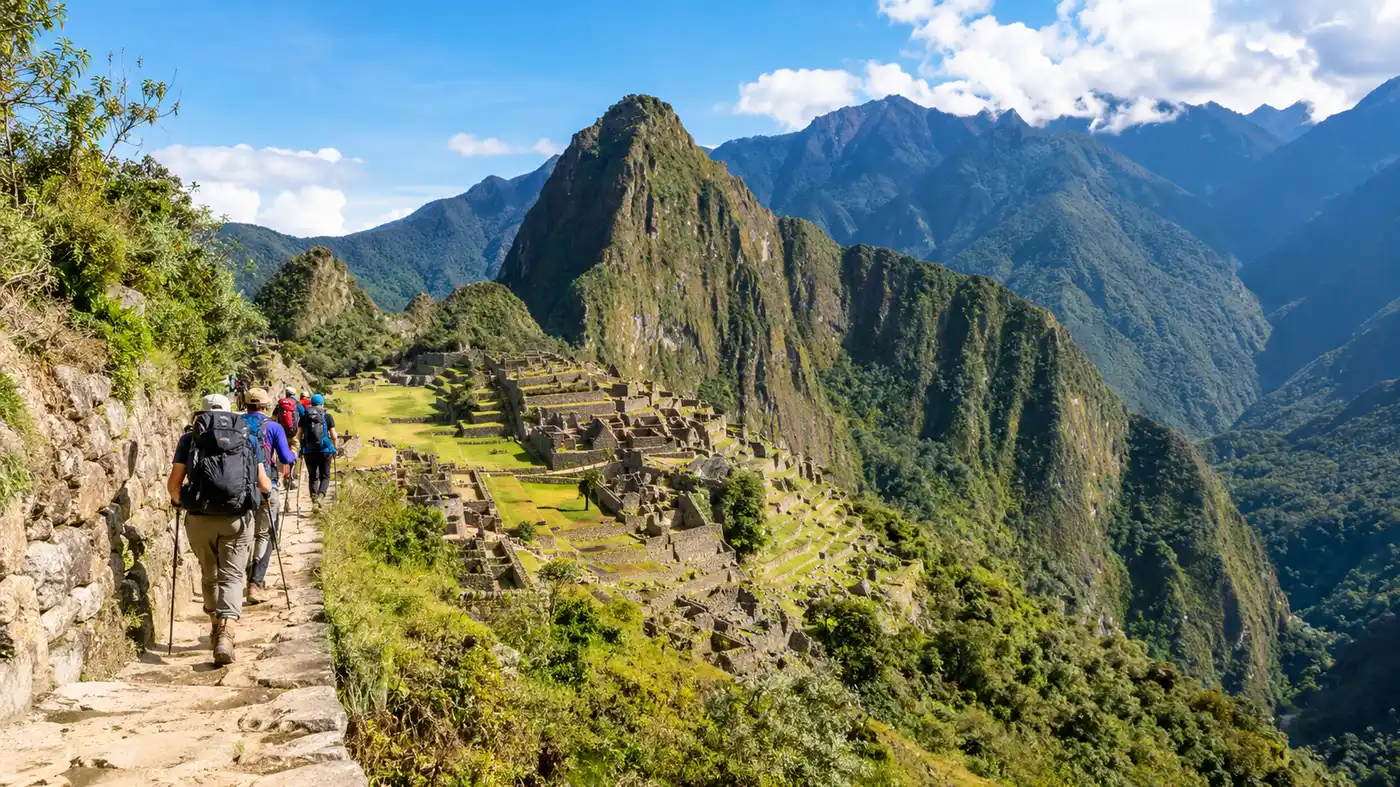
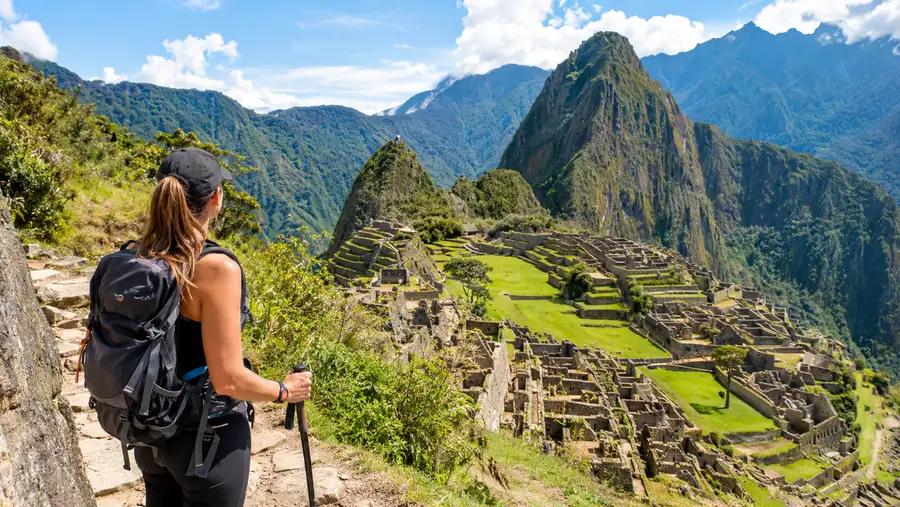
You crest the final step, catch your breath, and look down. Spread out on the saddle below you sits Machu Picchu, framed by the jagged peak of Huayna Picchu. After days of sweating in the wilderness, seeing the stone city in the soft morning light is an overwhelming sensory shift. You stand there among a crowd of dirty, exhausted hikers who all smell faintly of campfire smoke and insect repellant, watching the morning clouds drift across the terraces.
From the Sun Gate, the descent down to the citadel takes about 45 minutes on a wide stone path. You arrive at the iconic postcard viewpoint above the Guardhouse around 8:00 AM. Suddenly, you find yourself sharing the terraces with clean tourists wearing crisp clothes and white sneakers who rode the morning shuttle bus up from Aguas Calientes. It is a strange, jarring experience, but you will carry a distinct sense of pride knowing you walked every single mile to get there.
Trail Comparison: Daily Breakdown for the 4-Day Route
Every day on this trail brings a totally different combination of terrain, oxygen levels, and physical demand. Having the numbers in front of you helps immensely when you are trying to mentally prepare for the trip.
| Day | Route Segment | Distance | Avg. Walking Time | Max Elevation | Primary Terrain |
|---|---|---|---|---|---|
| Day 1 | Km 82 to Ayapata | 14 km (8.7 mi) | 6 to 7 hours | 3,300 m (10,826 ft) | Dusty dirt path, gentle stone climbs |
| Day 2 | Ayapata to Chaquicocha | 16 km (9.9 mi) | 8 to 9 hours | 4,215 m (13,828 ft) | Steep granite stairs, exposed alpine rock |
| Day 3 | Chaquicocha to Wiñay Wayna | 10 km (6.2 mi) | 5 to 6 hours | 3,600 m (11,811 ft) | Original Inca paving, cloud forest paths |
| Day 4 | Wiñay Wayna to Machu Picchu | 5 km (3.1 mi) | 2 hours | 2,720 m (8,923 ft) | Dirt contour trails, final steep scramble |
The numbers only tell part of the story. While day two covers the highest elevation and generates the most campfire anxiety, day three actually requires just as much care because of the damp stone surfaces and steep drops along the cliff paths.
Essential Realities of Camp Life
Washing your face in ice-cold water while the stars are still blazing overhead is an everyday reality on this route. The logistics run with military precision. Porters carry up to 20 kilograms of group gear, running past regular hikers so they can reach the next campsite an hour ahead of the group, pitch the sleeping tents, set up the chemical toilets, and start preparing food.
- Bathroom conditions: Government-built bathrooms at the campsites are notoriously rough, often lacking running water or toilet paper; carry your own supply and small coins for entry fees at Day 1 stops.
- Tipping the crew: Most groups pool tips on the final night; expect to contribute roughly 150 to 200 soles per traveler for the porter and kitchen pool.
- Morning routines: Wakeup calls are loud, efficient, and non-negotiable; packing your duffel before you drink your tea keeps the camp on schedule.
Frequently Asked Questions about inca trail 4 days itinerary
How far in advance do I need to book my permit?
Permits sell out months ahead, particularly for departures between May and September. Book at least five to seven months in advance to secure your preferred dates, as the Peruvian government caps trail entries at 500 people per day, with roughly 300 of those permits reserved for guides and porters.
Can I hike this itinerary without an organized guide or agency?
No. Independent trekking on the classic trail was outlawed in 2001. Every hiker must be accompanied by an officially licensed guide through a registered tour operator who secures your permits and provides required logistical support.
What happens if I get too sick to finish the trek?
If acute altitude sickness strikes on Day 1 or early Day 2, guides will evacuate you back down to Kilometer 82 on foot or by mule. Once you cross Dead Woman's Pass, evacuation is significantly harder and typically involves porter-assisted carries forward to the train line or Wiñay Wayna.
Quick Reference
- Total distance: 43 kilometers (26.7 miles)
- Highest point: Dead Woman's Pass (4,215m / 13,828ft)
- Permit cap: 500 people daily (including crew)
- Starting point: Kilometer 82, Piscacucho
- Finishing point: Inti Punku / Machu Picchu Citadel
Book your cusco inca trail experience:
My Take
There are easier, far more comfortable ways to see Machu Picchu. You can sit in a panoramic train car sipping coffee, check into a luxury hotel in the valley, and take the early morning bus right up to the front entrance without breaking a sweat. If your only goal is crossing the citadel off a bucket list, you should probably just take the train. But hiking the ancient path over the high passes transforms the arrival into an earned milestone rather than a standard photo op. When you stand on the wet grass at the Sun Gate after four days of sweat, blisters, and cold mountain camps, the ancient ruins feel less like a tourist site and more like the end of a personal journey you will remember for the rest of your life.
Read more about cusco inca trail.