How Hard Is the Inca Trail
Before stepping foot on the stones at Kilometer 82, I spent three months obsessing over forum posts asking how hard is the inca trail to machu picchu. Everyone seemed to have an opinion, but nobody agreed. Marathon runners claimed it wrecked their knees, while a sixty-year-old retired schoolteacher from Ohio wrote that she breezed right through with two walking poles and a pocket full of coca leaves. The truth sits somewhere in between, largely dependent on how your body handles thin air and thousands of irregular stone steps.
You will walk 26 miles over four days through microclimates that swing from sunbaked scrubland to freezing alpine tundra and steaming cloud forest. It is not technical mountaineering. You do not need ropes or ice axes. Still, calling it a casual walk is an outright lie that leaves unprepared hikers crying into their soup by night two. Understanding the physical demands helps you train your legs and mental endurance long before you reach the Sacred Valley.
Book your cusco inca trail experience:
Daily Reality and Inca Trail Difficulty
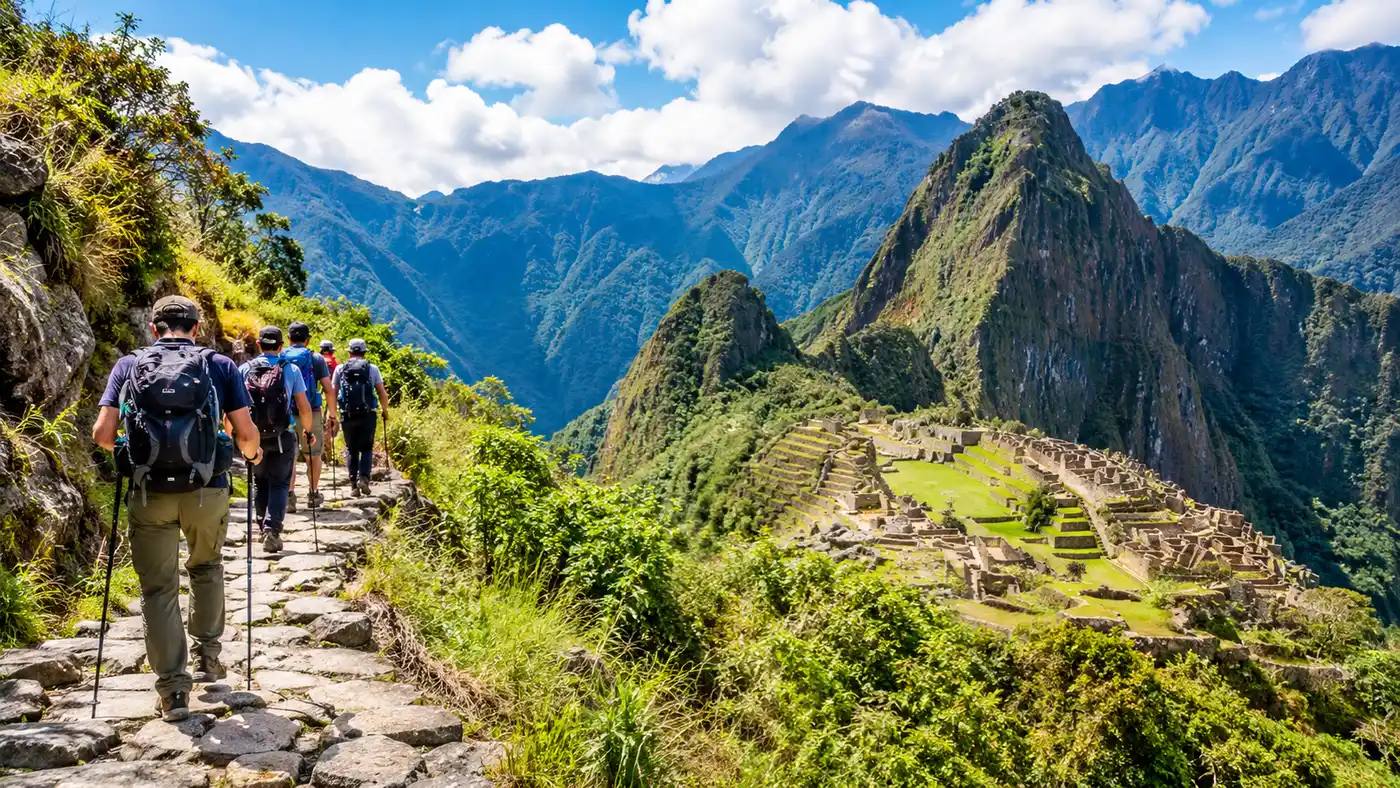
The trek does not distribute its pain evenly. Day one acts like a deceptive handshake. You leave the checkpoint at Piscacucho, follow the gentle bends of the Urubamba River, and think to yourself that the internet blew the whole thing out of proportion. There are gentle rolling hills, locals selling bottles of Powerade out of wheelbarrows, and wide dirt paths. You camp around 3,000 meters above sea level, feeling proud and thoroughly misled.
Then comes morning two. You wake up at 5:00 AM to a cup of warm coca tea pushed through your tent flap, and within an hour you are staring straight up at the brutal slope of Dead Woman's Pass, known locally as Warmiwañusqa. The trees vanish. The wind turns bitter. You gain nearly a thousand vertical meters over four miles of jagged rock stairs, breathing air that contains around 40 percent less oxygen than sea level. Every hiker settles into the same rhythm: take ten steps, lean on your poles, suck air for twenty seconds, repeat.
Day three is the longest, stretching nearly ten miles, but it offers the most dramatic scenery as compensation. You climb another pass at Runkurakay, squeeze through a narrow tunnel carved directly out of the mountain bedrock by Inca stonemasons, and descend into lush cloud forest hanging with orchids. The final morning requires a 3:30 AM wake-up call to wait in line at the final checkpoint before racing to the Sun Gate, Intipunku, for your first glimpse of the lost citadel below.
| Day | Distance | Peak Elevation | Terrain Type | Difficulty Rating |
|---|---|---|---|---|
| Day 1 | 12 km (7.5 mi) | 3,000 m (9,842 ft) | Packed dirt, rolling ascents | Moderate |
| Day 2 | 11 km (6.8 mi) | 4,215 m (13,828 ft) | Steep stone steps, exposed alpine | Very Demanding |
| Day 3 | 16 km (10 mi) | 3,950 m (12,959 ft) | Inca paving, steep descents | Strenuous |
| Day 4 | 5 km (3.1 mi) | 2,720 m (8,923 ft) | Narrow stone trail, jungle stairs | Easy to Moderate |
Every person in our group hit a mental wall at a different moment. For some, it was the sheer wind at the summit of the second pass. For others, it was the endless descent into the Pacaymayo valley that shook their quadriceps until they walked sideways down the stairs like crabs.
Altitude and How Difficult Is the Inca Trail to Machu Picchu
Fitness is only half the battle. You can train on stair climbers until your calves resemble carved granite, but high elevation plays by its own rules. The highest point on the classic trail sits at 4,215 meters (13,828 feet). If you want an in-depth breakdown of the numbers, check our guide on the Inca Trail altitude and highest point to see where the air gets thinnest.
Altitude sickness does not care about your half-marathon personal record. It hits people randomly, producing throbbing headaches, sudden nausea, sleeplessness, and a strange lethargy where tying your bootlaces feels like lifting an anvil. The secret is pacing. Fast hikers who charge up the passes to prove something to their friends frequently end up clutching a sick bag by noon, while the steady plodders who take tiny turtle steps arrive feeling tired but functional.
Pro tip: Spend at least three full days in Cusco or the Sacred Valley before starting. Drink water until you are annoyed by how often you have to pee, and skip heavy meat dishes on your first night at elevation.
Most guiding outfits carry emergency oxygen bottles and first aid kits. The porters are trained to monitor everyone, and if someone shows severe symptoms of acute mountain sickness, they will turn that person around and walk them down to lower elevations immediately. Do not hide your symptoms. Tell your guide the second a headache refuses to fade after water and ibuprofen.
Is the Inca Trail Hard on Your Knees and Joints?
The climbs steal your breath, but the descents steal your mobility. This is what surprises most people about inca trail hike difficulty. You are walking on original hand-laid Inca stones for long stretches. These rocks are uneven, slippery when damp, and angled in ways that force your ankles and knees to constantly make micro-adjustments.
Descending from Warmiwañusqa involves dropping roughly 700 meters over thousands of giant granite steps. The shock travels directly into your patellar tendons. By the end of day two, hiking poles are no longer optional accessories; they are structural crutches that save you from agony. I saw plenty of thirty-somethings nursing inflamed knee joints by icing them in freezing glacial streams at camp.
Proper preparation makes a world of difference. Before leaving home, you should read up on how to prepare for the Inca Trail hike, focusing heavily on leg stability and eccentric muscle contractions. Squats and lunges help, but walking down long flights of bleachers or outdoor concrete staircases gives your joints the specific conditioning they will scream for on day three.
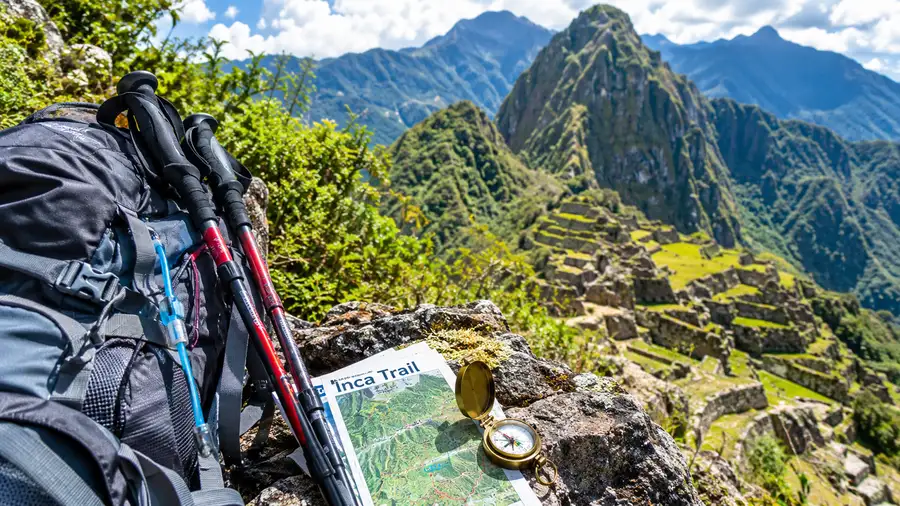
- Trekking poles: use rubber tips on the ends, as bare metal spikes are banned to protect the soft historic stones.
- Footwear choices: worn-in hiking boots with sturdy ankle support beat trail runners every single time on wet granite.
- Knee braces: pack simple neoprene compression sleeves even if you think your joints are bulletproof.
- Pace management: step down lightly rather than dropping your full body weight onto straight legs.
Note: Stone steps polished smooth by five centuries of foot traffic turn into slick ice rinks during a sudden cloudburst. Watch where you step when moss lines the rock edges.
Book your cusco inca trail experience:
2 Day Inca Trail Difficulty Compared to the Classic Route
Not everyone has four days to spend sleeping in tents, which leads many hikers to ask about the short Inca Trail 2 days alternative. This shorter trek bypasses the grueling high-altitude passes completely. You hop off the train at Kilometer 104, cross a hanging footbridge over the raging Urubamba River, and climb through the sub-tropical forest past the exquisite ruins of Chachabamba and Wiñay Wayna.
Make no mistake: 2 day inca trail difficulty is still genuine physical work. You hike for roughly six to seven hours on the first day, gaining around 600 meters of elevation in warm, humid conditions. It feels like climbing a damp stairmaster in a greenhouse. There are steep switchbacks and a notoriously exposed stone staircase near the Sun Gate affectionately known as the "Gringo Killer," where you literally scramble up on all fours.
The difference lies in altitude and logistics. On the short route, you top out around 2,720 meters, well below the threshold where severe altitude sickness usually strikes. You also sleep in an actual hotel bed in Aguas Calientes on night one rather than shivering inside a damp sleeping bag at freezing mountain camps. For families with kids, older travelers, or folks with cranky lumbar spines, the short inca trail difficulty offers a much gentler challenge without sacrificing the satisfaction of walking into Machu Picchu through the Sun Gate.
Is the Inca Trail Dangerous?
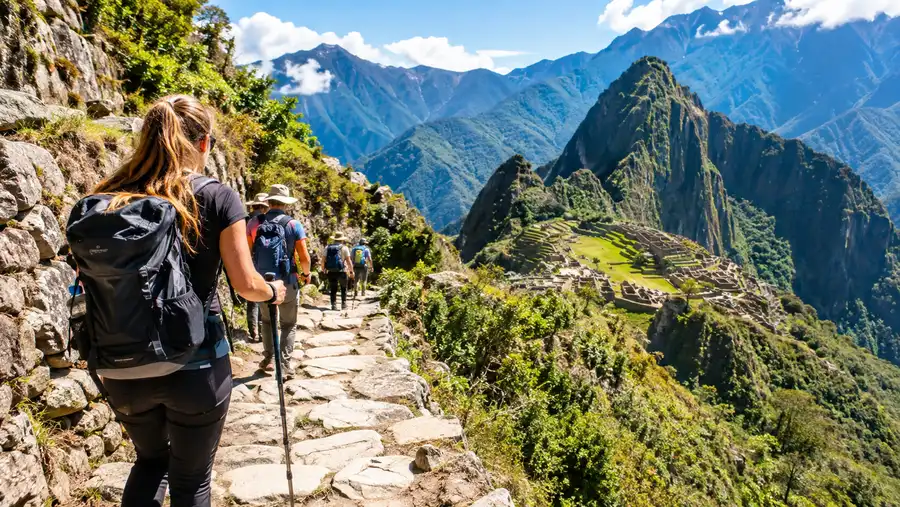
The short answer is no, provided you follow basic wilderness rules and listen to your trail leaders. But is the inca trail dangerous in certain spots? It can be if you lose focus. There are sections along the cloud forest ridges on day three where the trail narrows to a few feet wide, with lush vertical drop-offs plunging hundreds of meters down into the canyon below.
Nobody is going to fall off the mountain if they pay attention to their feet. The real risks are ordinary and dull: slipping on wet rock, turning an ankle on an irregular boulder, or suffering severe dehydration because you forgot to drink fluids in the cool wind. Flash mudslides happen occasionally during the wettest months, which is why the Peruvian government closes the entire trail system every February for trail conservation and safety repairs.
Here are several practical habits that keep you out of trouble while on the trail:
- Yield to the porters: always step to the mountain wall side of the trail, never to the cliff edge, when porters run past with heavy packs.
- Avoid selfies on ledges: pause and stand completely still before pulling your camera out to take scenic valley panoramas.
- Pack a headlamp: camp paths are dark, uneven, and riddled with guy-lines and drainage ditches after dusk.
- Purify your water: stick to the boiled water provided by your cook crew, or use reliable filtration tablets to avoid crippling stomach bugs.
Keep your focus sharp, accept that you will be dirty and sweaty, and the trail transforms from an intimidating obstacle course into an unforgettable mountain pilgrimage.
Frequently Asked Questions about how hard is the inca trail to machu picchu
Can a beginner hike the Inca Trail?
Yes, ordinary people with average fitness complete it every week. You do not need previous wilderness backpacking experience because porters carry the tents, cooking gear, and heavy food supplies. As long as you train on stairs before the trip and acclimatize properly in Cusco, a determined beginner can finish the trek safely.
How fit do you really need to be?
You should be comfortable walking five to seven hours uphill on consecutive days. If you can climb thirty flights of stairs without gasping for breath and walk eight miles over hilly park terrain on a weekend morning, you possess the basic endurance required for the mountain passes.
What is the hardest part of the entire hike?
The final push up to Dead Woman's Pass on day two is universally considered the most grueling section. You climb nearly a thousand vertical meters up steep, uneven rock steps above the tree line, fighting thinning air and cold winds before finally cresting the ridge at 4,215 meters.
Is the Inca Trail harder than climbing Kilimanjaro?
No, Kilimanjaro is significantly harder because of extreme altitude, bitter arctic temperatures near the crater rim, and multiday treks reaching nearly 6,000 meters. The Inca Trail is warmer, much lower in elevation, and shorter, though its stone staircases can be tougher on knee joints than Kilimanjaro's volcanic gravel.
Quick Reference
- Total distance: 42 km (26 miles)
- Highest point: 4,215 m (Warmiwañusqa)
- Toughest day: Day 2 (climb to Dead Woman's Pass)
- Required prep: 2-3 days minimum altitude acclimatization
Book your cusco inca trail experience:
The Real Bottom Line
How difficult is the Inca Trail to Machu Picchu at the end of the day? It will test you. Your legs will ache, your breath will catch in your throat, and there will likely be a moment halfway up a wet stone staircase where you wonder why you paid good money to exhaust yourself in the Andes. But when the morning fog parts over Intipunku and the stone terraces of the citadel reveal themselves in the golden sunrise, every single drop of sweat pays off. Start training your legs now, give yourself time to adjust to the elevation, and take the trail one slow step at a time.
Read more about cusco inca trail.