Hiking the Inca Trail in the Rainy Season
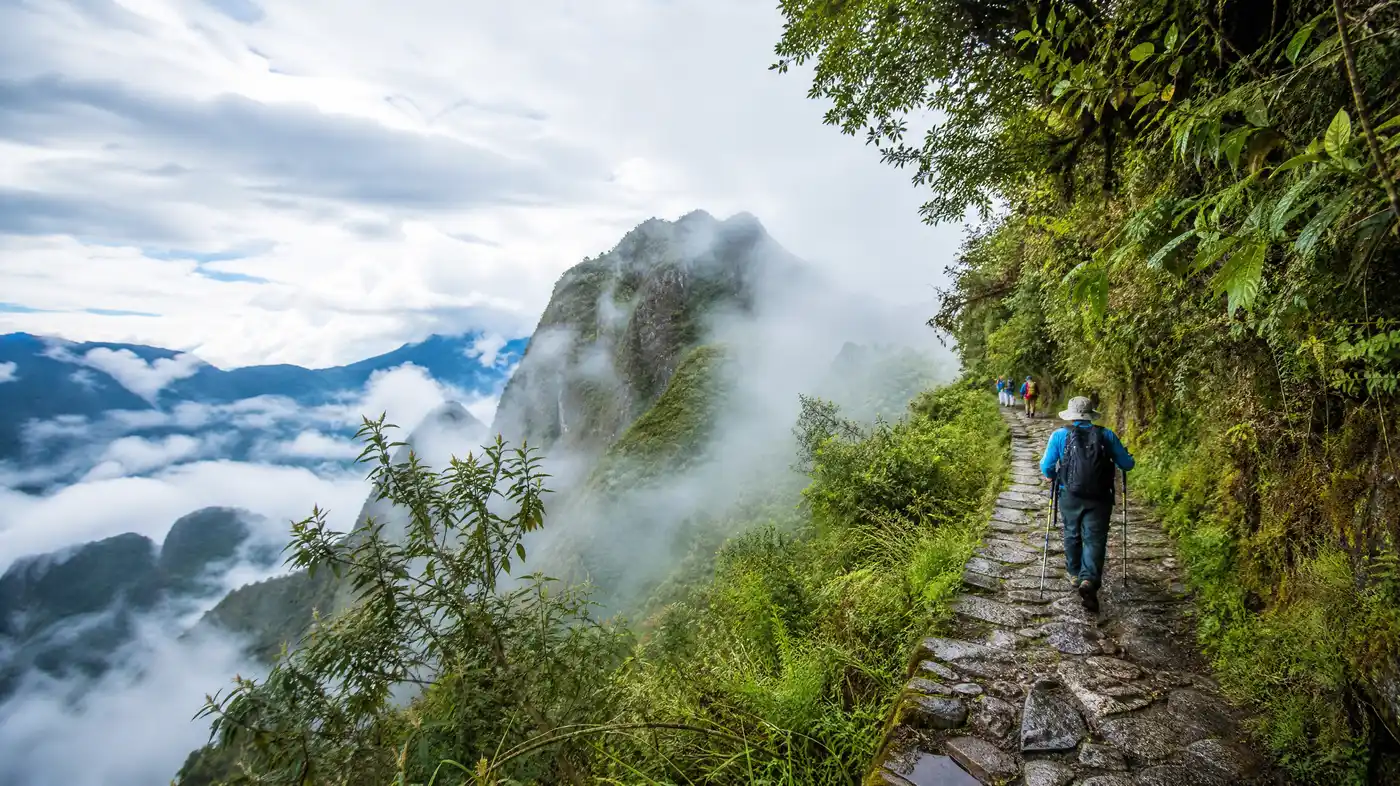
My socks were completely soaked by hour three of day two, and honestly, I did not care at all. Thick white mist was tumbling over the jagged ridge of Dead Woman's Pass like stage smoke, masking the stone steps twenty feet ahead, and for nearly half an hour nobody in our small crew said a word. Most travel agencies try to steer you away from wet months in the Andes, but tackling the inca trail in march taught me that Andean cloudbursts turn an already famous trail into something raw, atmospheric, and deeply peaceful.
The rainy period in Cusco and the Sacred Valley runs from late October through early April. Deciding to hike during this window means weighing slippery granite against empty ruins, and daily downpours against hillsides bursting with blooming orchids. If you are debating whether to risk a wet season departure, this guide lays out the practical reality of trail conditions, gear necessities, month-by-month differences, and how to stay comfortable when the skies open up.
Book your cusco inca trail experience:
Inca Trail Dry Season vs Wet Season: Crowds or Cloudbursts?
Hikers routinely ask about the best time to hike inca trail, and almost every guidebook blindly points to June, July, or August. Those dry winter months bring reliable sunshine, crisp days, and zero mud. They also bring 500 people per day marching single file along narrow cliffside paths, fully booked permits six months in advance, and campsites that feel like busy festival grounds. You spend your morning coffee listening to three other tour groups test their portable radios.
The inca trail dry season vs wet season trade-off comes down to what you tolerate best: wet boots or crowds of strangers. Wet season flips the whole dynamic on its head. The hillsides transform from parched yellow grass into deep, vibrant green carpet. Wild begonia and delicate high-altitude orchids shoot up between tumbled masonry. You will round famous bends near Sayacmarca and find yourself completely alone with the ancient rocks. If solitude matters more to you than dry trousers, wet season is arguably the best time of year to hike inca trail.
Temperatures shift far less than people expect. Wet season daytime temperatures hover around 18 or 19 degrees Celsius, which is actually slightly warmer than the bone-chilling winter afternoons of July. Night temperatures rarely drop below freezing, unlike the dry season when frost coats the inside of your canvas tent. The real struggle is not cold air. It is relentless moisture that slowly creeps into every seam of your gear if you get careless.
Note: The classic 4-day Inca Trail is closed for the entire month of February for conservation work, stone step repairs, and campsite drainage overhauls. Machu Picchu remains open via train, but trail permits cannot be booked for February.
Month by Month: What the Wet Months Actually Feel Like
Lumping the whole wet season together is a mistake because the weather shifts dramatically from month to month. The rains begin slowly with the inca trail in november. Mornings throughout November are generally bright and sunny, followed by sudden, violent showers that hit around 2:00 PM and wrap up by dusk. Taking on the inca trail november routes means you get shoulder-season pricing, moderate trail traffic, and manageable rain that rarely washes out roads.
Conditions intensify through the inca trail in december. Rain falls more frequently across the Urubamba valley, swelling the rivers and coating stone paths with slick moss. If you book an inca trail december trip, you might get three straight days of gentle mist or two afternoons of torrential downpours. Holiday crowds bump permit numbers between Christmas and New Year, creating a brief, lively spike along the trail before things quiet down dramatically.
Mid-season arrives with the inca trail in january. January brings thick cloud banks that linger on mountain ridges for days at a time. The inca trail january conditions demand serious rain gear, as rivers run high and stone trails turn into small temporary streams. Then comes the mandatory shutdown for the inca trail in february. When permits reopen, the inca trail in march delivers revitalized trails, quiet camps, and fading storms, eventually sliding into the brilliant, clear conditions of the inca trail in april. Choosing the right month depends entirely on your tolerance for damp gear and unpredictable mountain weather.
| Month | Average Rain (mm) | Daytime High (°C) | Trail Crowd Level | Trail Status |
|---|---|---|---|---|
| November | 80 mm | 19°C | Moderate | Open |
| December | 120 mm | 18°C | Moderate | Open |
| January | 155 mm | 17°C | Low | Open |
| February | 190 mm | 17°C | None | Closed for maintenance |
| March | 130 mm | 18°C | Low to Moderate | Open |
| April | 50 mm | 19°C | Moderate | Open |
Why Choose the Inca Trail in March
Hikers who look at raw rainfall charts often cross March off their list immediately. That is usually a mistake. While the start of the month can still catch tail-end summer storms, late inca trail march trekking provides some of the most rewarding conditions of the year. The trail crew spent all of February replacing cracked steps, clearing mud traps, and cutting back invasive overgrowth. You step onto fresh, clean stonework that has rested for four full weeks without tourist boots trampling it.
The cloud forest section around Wiñay Wayna looks breathtaking in early spring. Over 250 species of orchids grow along this stretch of trail, and many bloom specifically between late February and April. Seeing those bright purple and yellow petals clinging to mossy Inca walls in the damp mountain air is something dry season hikers simply never get to experience.
Permit availability is another massive advantage. During peak winter months, permits disappear within hours of release. For the inca trail season in March, you can often find open trek dates three or four weeks in advance. That flexibility allows you to monitor regional forecasts before locking in flights. Before committing, review our full breakdown of the best time to hike the Inca Trail to see how early spring stacks up against winter dates.
Pro tip: Buy high-tack silicone sealant before your trip and coat the outer stitching of your hiking boots, then pack four separate heavy-duty trash compactor bags to line the inside of your duffel.
Book your cusco inca trail experience:
Wet Season Survival: What You Actually Need in Your Pack
Standard hiking gear advice falls apart when it rains continuously for six hours. Cheap plastic rain ponchos bought on the street in Cusco for 15 soles tear the second you brush against trailside thorn bushes. You need real, durable protection if you want your dry sleeping clothes to stay dry until you reach camp at night.
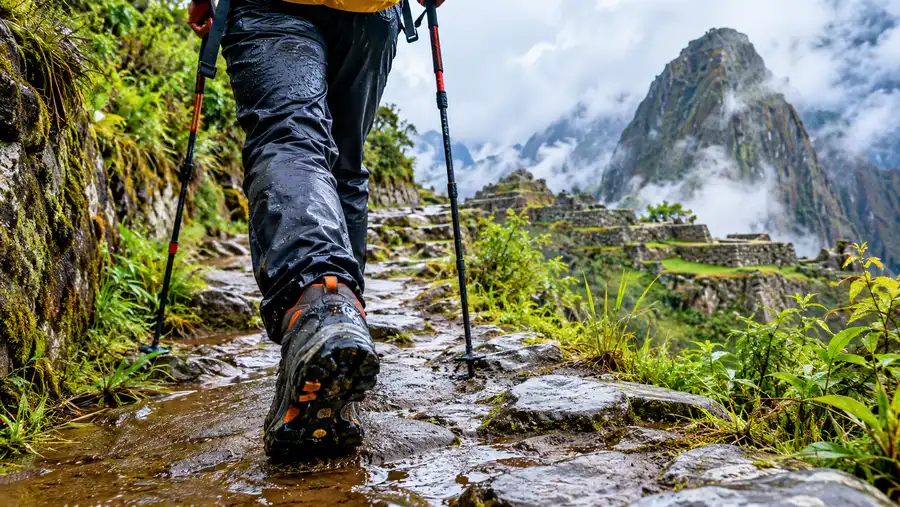
Wet granite steps act like black ice if your footwear lacks deep rubber lugs. Trail runners with soft Vibram soles often hold better on wet slate than stiff mountaineering boots with hard plastic edges. Pacing matters just as much as footwear, especially when descending from Dead Woman's Pass toward Pacaymayo. If you want to understand how technical the footing gets on these slippery drops, read our guide on how hard is the Inca Trail before packing your bags.
- Silicone or dry-bag duffel liners: Porters carry your main duffels wrapped in tarps, but water always finds a way into corners, so wrap your sleeping bag and evening layers in sealed dry sacks.
- Rubber pole tips: Bare carbide trekking pole tips skid dangerously across wet Inca stone stairs, while broad rubber feet give you solid traction on slick descents.
- Synthetic base layers: Cotton shirts stay wet for thirty hours in the humidity of the cloud forest, while synthetic merino blends pull water away and dry overnight in your tent.
- Gore-Tex rain mitts: Walking with poles in cold rain turns your fingers numb within forty minutes, making lightweight waterproof over-mitts worth every single gram.
Trail Safety, Mudslides, and Daily Rhythms
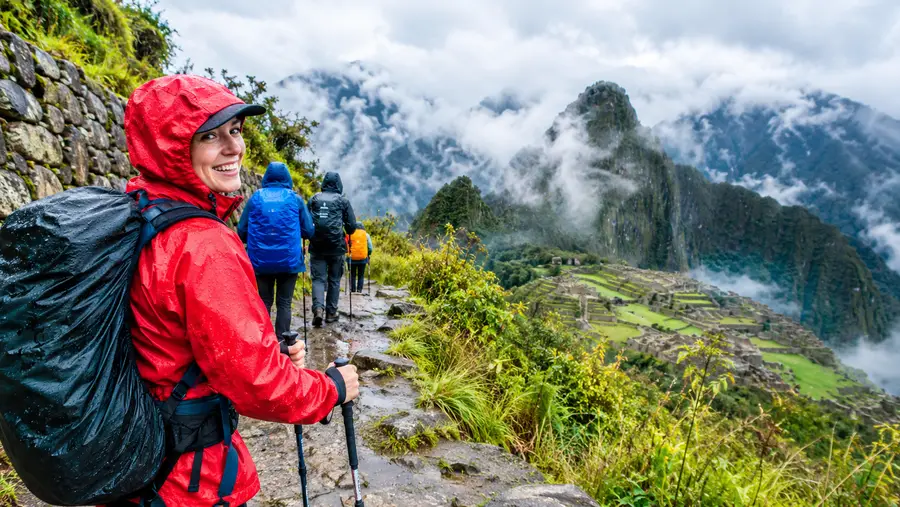
Rain in the high Andes follows an established daily cadence. You will rarely wake up to downpours. Most days dawn crisp, clear, and quiet, with sunlight burning through low valley fog by 7:00 AM. Storm clouds start gathering around the peaks around 1:30 PM, dropping the heaviest rain between 2:30 PM and 5:00 PM before clearing out again before bedtime.
Because of this predictable rhythm, experienced guides push groups to start walking early. Leaving camp at 5:30 AM allows you to crush five or six miles and reach the next campsite before the afternoon skies open up. Sitting under a dry mess tent drinking hot coca tea while rain hammers the canvas roof is actually cozy, provided you are done walking for the day.
Landslides and washouts do happen occasionally, particularly in steep drainage gullies along the railway near Aguas Calientes or on the road between Ollantaytambo and KM 82. Licensed trekking agencies monitor satellite alerts and park service radios hourly. If a trail section washes out, guides redirect groups along safe detours or hold at secure camps. Trust their local judgment, carry a little extra patience, and accept that Andean weather answers to nobody.
- Early camp departures: Hitting the trail before 6:00 AM lets you complete the bulk of daily elevation gain before storm clouds gather overhead.
- Flat-footed stepping technique: Landing flat on your midfoot rather than your heel spreads your weight across wet stones and minimizes slipping hazards.
- Hydration pack covers: Daypacks soak through quickly during steady rain, so keep your electronics, passport, and daily snacks inside an internal dry bag instead of trusting outer zippers.
Frequently Asked Questions about inca trail in march
Is the trail too wet to hike in March?
No, March is completely manageable if you have decent waterproof gear. While showers are common in the afternoons, rainfall drops significantly compared to January and February, and the mornings often offer clear views.
Are permits cheaper during the rainy season?
The government sets a fixed permit price that stays the same year-round. However, many trekking agencies offer small off-season discounts on group tour packages between November and March to fill spots.
Will clouds block the view of Machu Picchu from the Sun Gate?
Fog often blankets the Sun Gate early in the morning during wet months. In most cases, rising morning temperatures burn the mist off by 8:30 or 9:00 AM, revealing the ruins below in dramatic, swirling cloud cover.
What happens if a landslide closes the trail?
Park rangers and local authorities monitor slope stability daily. If a section becomes dangerous, rangers redirect hikers via lower paths or organize train transit from KM 104 directly into Aguas Calientes.
Quick Reference
- Trail closed annually throughout February
- March average rainfall: roughly 130 mm
- Daily rain pattern: clear mornings, afternoon showers
- Key gear: rubber pole tips, dry bags, merino wool
Book your cusco inca trail experience:
The Bottom Line
Trekking the Andes during wet season is not for travelers who need pristine sunshine and bone-dry boots to enjoy themselves. If you need guaranteed blue skies, wait for June. But if you want misty cloud forests, blooming orchids, quiet stone paths, and the thrill of seeing Machu Picchu materialize through dramatic mountain fog, hiking during these shoulder months delivers an unforgettable adventure. Pack three extra pairs of wool socks, waterproof your gear completely, and embrace the rain.
Read more about cusco inca trail.