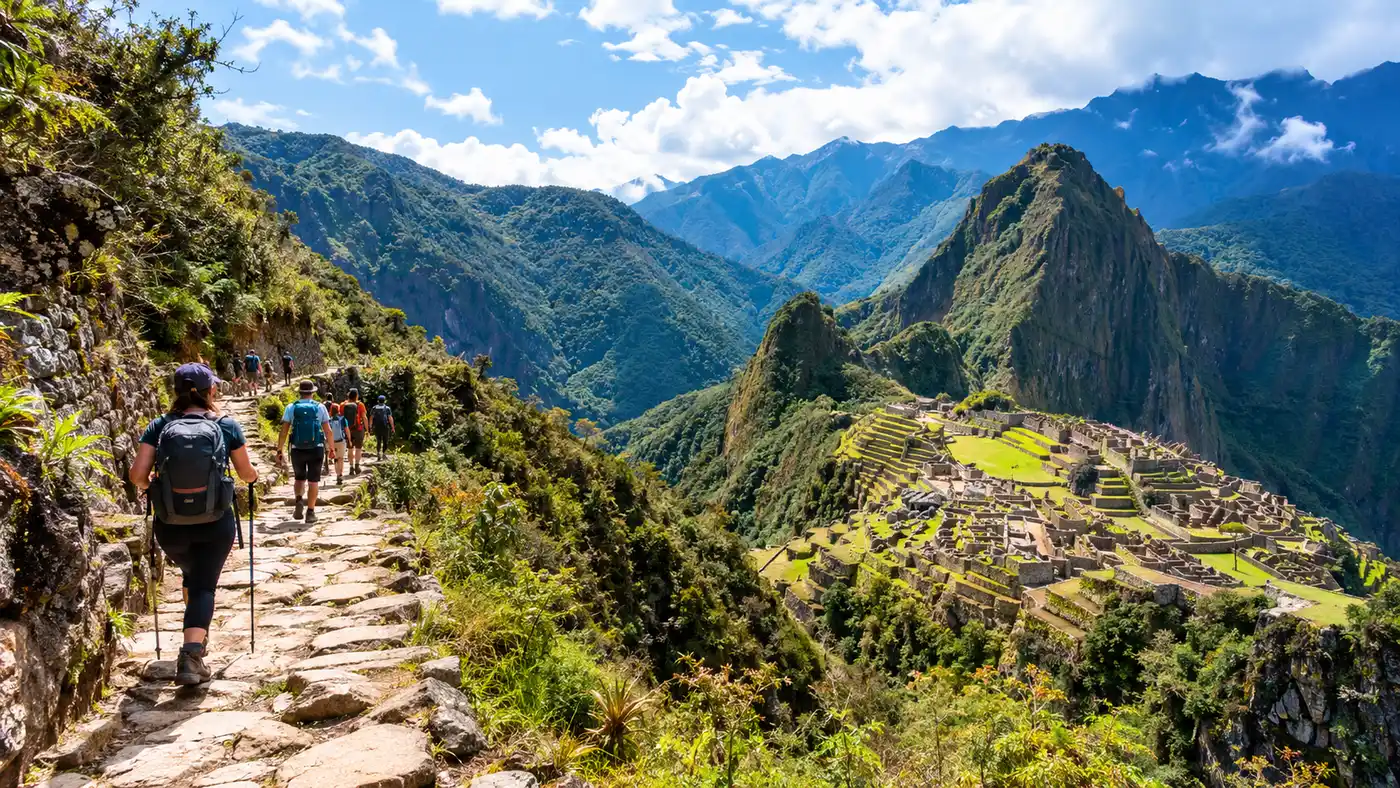
Inca Trail to Machu Picchu Complete Overview
Most people imagine stepping off a train in Aguas Calientes, taking a short bus ride up switchbacks, and snapping a photo above the stone terraces. Walking the inca trail to machu picchu is a completely different beast. You spend four days climbing slick granite stairways, sleeping in frosty tents, and wheezing over high-altitude mountain passes before you ever set foot inside the citadel. It ruins your knees, soaks your socks, and gives you some of the best sunrises you will ever see in South America.
This path was never meant to be a simple transit road. The Incas engineered it in the fifteenth century as a ceremonial highway, dotted with religious waypoints, agricultural outposts, and military checkpoints that slowly prepared pilgrims for the sacred sanctuary at the end. Today, it remains one of the world's premier multi-day hikes, drawing thousands of hikers who want to earn their first view of the ruins from Inti Punku rather than through the window of a luxury train car.
Book your cusco inca trail experience:
Understanding the Inca Trail to Machu Picchu
The trail weaves through the Sacred Valley and into the Amazon basin, crossing three distinct microclimates in less than a week. You start in a dry, scrubby river valley full of cacti and eucalyptus trees. Within twenty-four hours, you are gasping for air on barren, windswept alpine tundra where nothing grows except stiff ichu grass. By day three, you drop into lush cloud forest where moss blankets the trees, wild orchids hang over stone retaining walls, and hummingbirds dart between bamboo stalks.
What surprises most hikers is that the citadel at the end is only a fraction of the historical experience. The trail itself passes through a dozen smaller archaeological sites that you can only visit on foot. Patallacta sits on a flat river terrace early on, showing off hundreds of agricultural terraces. Runkurakay serves as a semicircular watchtower perched halfway up a cliff. Sayacmarca feels like an impenetrable fortress, accessed by a terrifyingly narrow stone staircase hanging over the abyss. If you want a deep dive into the daily pacing, our classic Inca Trail 4 days itinerary breaks down how these ruins punctuate the journey.
You cannot simply decide to backpack this trail on your own. In 2001, the Peruvian government enacted strict preservation rules to protect the delicate stone paving and fragile sub-tropical ecosystem from erosion. Every trekker must be accompanied by a licensed guide, and only authorized tour operators can purchase permits. Porters carry the heavy canvas mess tents, gas burners, dining tables, and sleeping pads, moving at an astonishing trot while wearing sandals made from recycled truck tires.
Distance and Elevation on the Machu Picchu Inca Trail
Hikers usually want to know how far is the inca trail to machu picchu before committing their money. The classic inca trail to machu picchu distance is exactly 42 kilometers, or roughly 26 miles, walked over four days and three nights. That number often fools people into thinking it will be a relaxing walk. Twenty-six miles over four days sounds like an average weekend stroll in a city park, but the numbers hide the brutal topography of the Peruvian Andes.
The machu picchu inca trail starts at Kilometer 82, a railroad siding sitting at 2,600 meters above sea level. From there, the route climbs relentlessly upward to Dead Woman's Pass, known locally as Warmiwañusqa. At 4,215 meters (13,828 feet), the air holds about forty percent less oxygen than at sea level. Your heart pounds in your throat, your legs turn to lead, and every five steps require a pause to suck in the thin mountain air. Following that climb is a punishing descent down three thousand hand-carved stone steps that can wreck unprepared quadriceps.
| Day | Start to Finish | Distance | Highest Altitude | Hiking Time |
|---|---|---|---|---|
| Day 1 | Km 82 to Wayllabamba | 12 km (7.5 mi) | 3,000 m (9,842 ft) | 5 - 6 hours |
| Day 2 | Wayllabamba to Pacaymayo | 11 km (6.8 mi) | 4,215 m (13,828 ft) | 6 - 8 hours |
| Day 3 | Pacaymayo to Wiñay Wayna | 16 km (9.9 mi) | 3,950 m (12,959 ft) | 8 - 9 hours |
| Day 4 | Wiñay Wayna to Machu Picchu | 5 km (3.1 mi) | 2,720 m (8,923 ft) | 2 - 3 hours |
Understanding how hard is the Inca Trail comes down to your relationship with downhill steps. The third day is the longest in pure distance, covering sixteen kilometers across two mountain passes, yet many find it easier than day two because the trail winds along undulating Inca causeways through the clouds. You hike through tunnels blasted directly out of rock faces, cross ancient wooden bridges over ravines, and look out over glacier-capped peaks that drop straight into steaming green valleys.
Note: The trail closes entirely every February for maintenance, trail repairs, and conservation work. Do not plan a trip for this month, though the ruins themselves remain accessible by train.
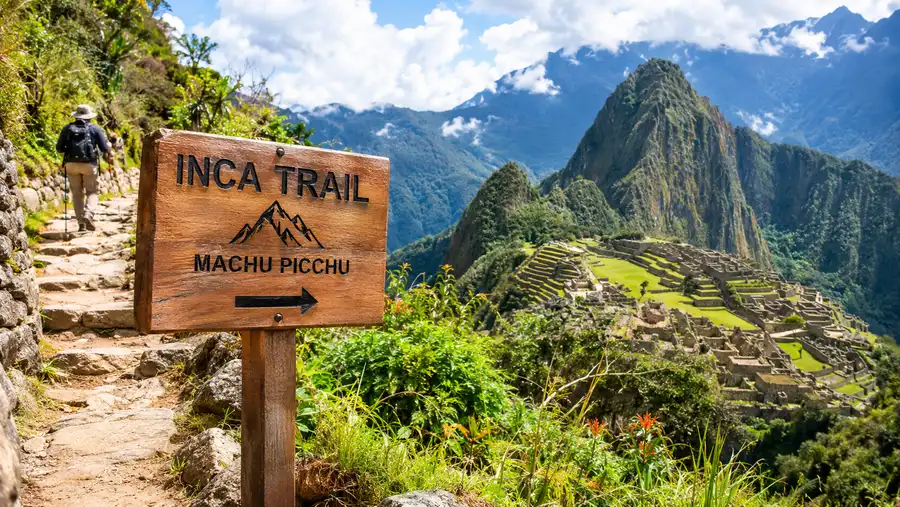
Permits, Timing, and Booking Essentials
Permit availability rules the entire planning process. The Peruvian Ministry of Culture limits entries to 500 people per day on the trail. That sounds generous until you realize that over 300 of those slots go straight to the mandatory staff: guides, chefs, and porters. That leaves only about 180 to 200 permits daily for tourists from all over the planet. During the dry season from May through September, dates sell out six to eight months ahead of time.
If you show up in Cusco hoping to book a trek for the following Tuesday, you will be disappointed. You must book with a registered agency well in advance, providing your exact passport number, full legal name, and date of birth. If you renew your passport after purchasing the permit, you have to bring both the old physical passport and your new one to the checkpoints along the trail. If the numbers do not match up, the rangers at Kilometer 82 will turn you away at the gate without hesitation.
Cost varies based on service levels, but cheaping out here is usually a mistake. A legitimate small-group trek generally costs between $750 and $1,100 per person. Rock-bottom operators cutting prices down to $500 almost always do so by underpaying their porters, serving insufficient food, or using battered camping equipment that leaks during sudden downpours. Ethical agencies treat their porters properly, provide them with warm sleeping gear and fair wages, and adhere strictly to the 20-kilogram carry weight limits enforced at weighing stations along the path.
Book your cusco inca trail experience:
Camp Life and Physical Reality on the Route
Trekking life follows an austere, repetitive rhythm that feels wonderful once you settle into it. Every morning starts around 5:00 AM, or even earlier on day two, when a porter unzips your tent door with a tin cup of hot coca tea. You pack your sleeping bag, roll up your inflatable mattress, stuff your duffel bag, and head to the dining tent for a breakfast of porridge, eggs, and fried plantains before lacing up your damp boots.
- Morning wakeups: Hot water bowls arrive at dawn so you can wash dust off your face before eating.
- Trail nutrition: Lunches are three-course hot meals cooked in canvas kitchen tents, often featuring hearty vegetable soups, trout, lomo saltado, and purple corn pudding.
- Hydration routine: Operators boil, filter, and cool mountain water for your bottles at every meal stop, so you rarely need to buy plastic bottles on the trail.
- Bathroom facilities: Camp toilets range from flush toilets at lower camps to primitive squat toilets over deep pits higher up, so carrying personal toilet paper and hand sanitizer is mandatory.
Nighttime in the Andes is cold. At the higher campsites like Ayapata or Pacaymayo, temperatures routinely plunge near freezing, hovering around minus two degrees Celsius in June and July. You spend your evenings bundled in thermal base layers, a fleece, and a down jacket, listening to the wind rattle against the rainfly. By 8:00 PM, nearly the entire campsite is asleep, exhausted from seven hours of stone stairs.
Pro tip: Bring a pair of lightweight slip-on camp shoes or sandals to change into the second you hit camp. Peeling off stiff, sweat-soaked hiking boots gives your feet instant relief and helps blisters dry out overnight.
Altitude sickness remains the great wild card. It has little to do with how many miles you run on a treadmill at home or how low your body fat is. Your body simply needs time to produce extra red blood cells to carry oxygen. Spending at least two full days resting, drinking water, and walking slowly around Cusco (3,400 meters) before starting the trek makes the difference between an incredible journey and four days of migraine-induced misery.
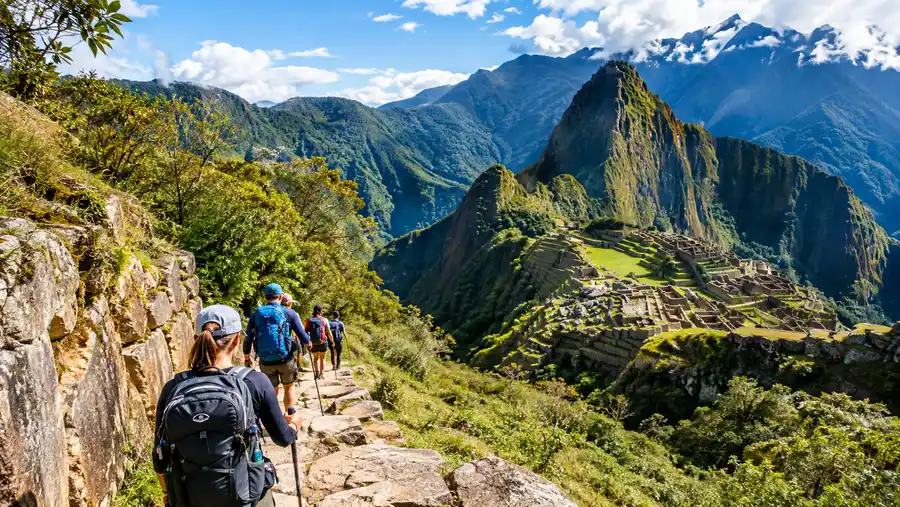
Arriving at the Sun Gate
The final morning begins in the pitch black. Hikers wake up around 3:30 AM at the Wiñay Wayna camp, gobble down a quick breakfast or boxed snack, and wait at the trail checkpoint until the rangers open the gates at 5:30 AM. Once the gate unlocks, everyone moves quickly along the contour of the mountain through the cloud forest, knowing the journey is almost finished.
About an hour into the hike, you hit the "Gringo Killer." It is a nearly vertical staircase of fifty roughly carved stone steps that forces you onto all fours, scrambling hand over foot like a bear. At the top of those steps sits Inti Punku, the Sun Gate. When you clear the stone threshold, you look out across the valley, and there it sits: the emerald terraces, the white granite walls, and the iconic peak of Huayna Picchu rising behind the ancient city.
- Arrival timing: Most groups reach the Sun Gate between 6:30 AM and 7:15 AM as morning mist burns off the valley floor.
- Luggage storage: You cannot bring large trekking packs into the main ruins; you must check them at the main entrance gate for roughly five soles.
- Citadel circuits: Your trail permit includes an entry ticket to explore the classical ruins with your guide, usually following Circuit 1 or Circuit 2.
Honestly, the emotional contrast when you reach the ruins is slightly jarring. For four days, you have been surrounded only by other hikers, Quechua porters, and mountain silence. Suddenly, you walk past the guardhouse and enter a sea of hundreds of clean tourists wearing crisp clothes, perfume, and fashion sneakers, having just arrived on the morning bus from Aguas Calientes. You smell like woodsmoke, sweat, and bug spray. You will feel worn out, filthy, and entirely proud of how you got there.
Frequently Asked Questions about inca trail to machu picchu
Can you hike the trail without an agency?
No. Independent trekking on the classic route has been illegal since 2001. You must book through an authorized tour operator who arranges licensed guides, permits, and porter support.
How far in advance do I need to book?
For high season travel between May and September, secure your permits five to seven months ahead. For shoulder months like April or October, three to four months is usually sufficient, though earlier is always safer.
What happens if I get altitude sickness on the trail?
Guides carry supplemental oxygen tanks and first aid kits. If your symptoms are severe, an assistant guide will escort you back down to lower altitude or arrange an emergency evacuation route via the railway.
Quick Reference
- Total length: 42 km (26 miles)
- Highest point: 4,215 m / 13,828 ft (Dead Woman's Pass)
- Permit cap: 500 people per day (including staff)
- Annual closure: Entire month of February
Book your cusco inca trail experience:
The Bottom Line
The journey tests your patience, your knees, and your lungs, but it provides a connection to Andean history that no train ticket can buy. When you finally stand at the Sun Gate in the early morning light, watching clouds roll off Huayna Picchu, every steep step you took over Dead Woman's Pass suddenly feels worth it. Take the time to train your legs, spend three days acclimatizing in Cusco, choose a responsible local trekking agency, and prepare yourself for one of the greatest foot journeys on earth.
Read more about cusco inca trail.