Is the Inca Trail Suitable for Beginners
Every afternoon in Cusco, you see people sitting outside bakeries on Calle Triunfo, staring down into steaming mugs of coca tea with a look of quiet panic. They booked a trek months ago from their living room couch, but now that the mountains are towering over the city, reality has set in. If you find yourself asking is the inca trail suitable for beginners, you are far from the first person to lose sleep over it. The quick answer is yes, you can do it, though the word beginner carries a lot of different meanings depending on who is talking.
A twenty-something gym rat who has never slept in a tent is a beginner. A fifty-year-old gardener who walks five miles every morning on flat pavement is also a beginner. Both can finish this trek, yet their bodies will experience the trail in wildly different ways. Completing this journey does not require rock climbing skills or technical mountaineering experience. It demands aerobic stamina, joint resilience, and a stubborn willingness to keep walking when your quads burn and your lungs feel like dry paper.
Book your cusco inca trail experience:
Is the Inca Trail Suitable for Beginners: Breaking Down the Terrain
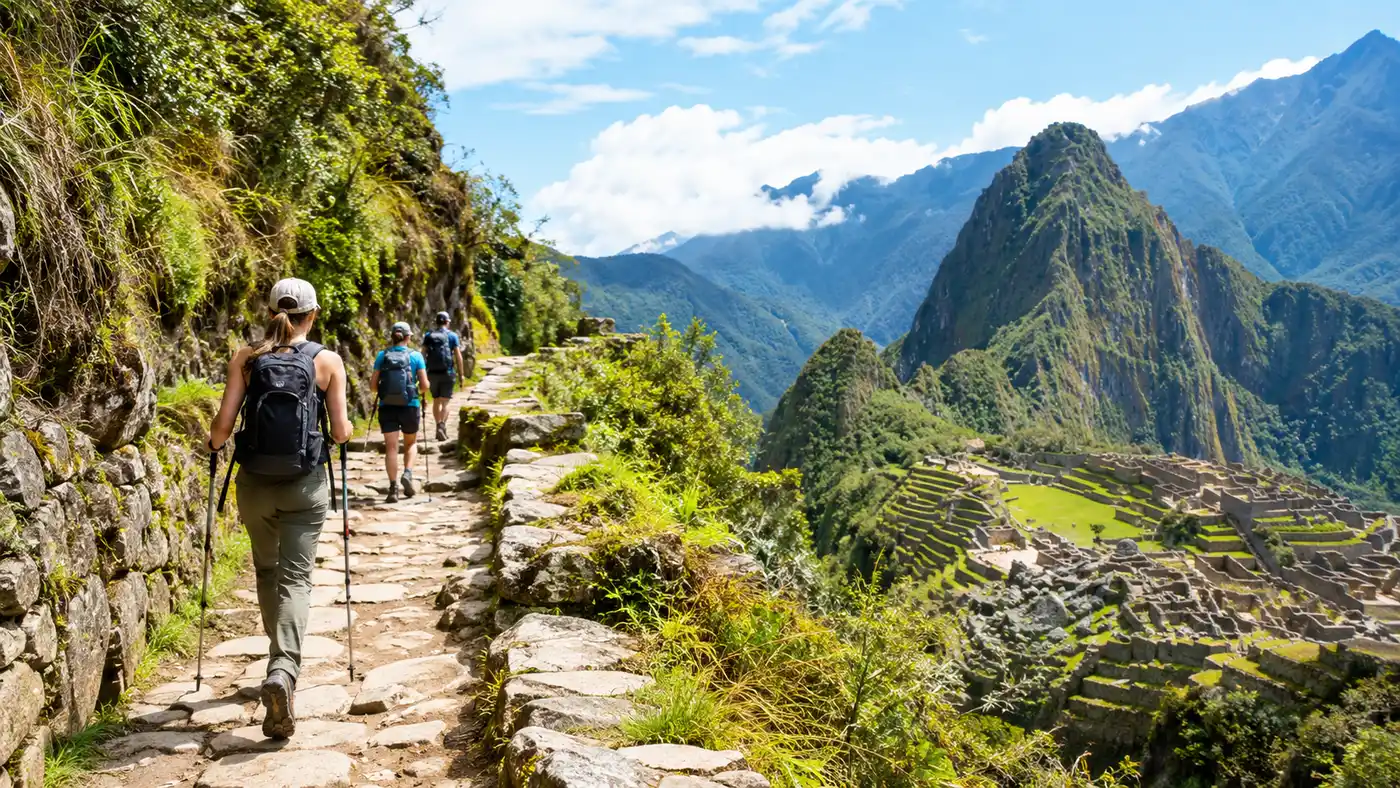
The classic Inca Trail covers roughly 44 kilometers over four days. That distance sounds modest on paper. If you spread 26 miles across four days on flat ground, anyone could stroll through it while listening to podcasts. The Andes do not do flat ground. The trail is an ancient highway built out of thousands of granite steps, cut into mountain ridges and plunging through cloud forests. Some steps are ankle-high and smooth, while others are knee-high boulders slick with moss and morning drizzle.
Day one lures you into a false sense of security. You start at Kilometer 82, rolling alongside the Urubamba River with gentle undulations and plenty of snack stops. Your guide talks about flora. You take photos of cactus flowers. Then day two arrives, and everything changes. You face a punishing ascent up to Dead Woman's Pass, known locally as Warmiwañusqa. You start climbing around 3,000 meters and top out at 4,215 meters. There are no switchbacks on the final push. It is just step after stone step into thinning air where your heart thumps behind your eyeballs.
Going down can actually be harder on inexperienced knees than going up. After crossing the pass, you drop nearly 1,000 vertical meters into the Pacaymayo valley on wet stone steps. If you have never hiked long descents, your knees take a beating. The repetitive impact shocks your stabilizer muscles within an hour. This is where novice hikers often begin to limp, leaning heavily on their hiking poles like crutches.
Note: Stone steps laid down five centuries ago do not conform to modern building codes. Expect random step heights ranging from 4 inches to over 16 inches, which tires out hip flexors much faster than standard gym stairs.
Day three is long, spanning about 16 kilometers, but it is visually stunning. You navigate undulating Inca staircases, passing through ruined stone tunnels and hanging cloud forests. By day four, you wake up around 3:30 AM to walk the final, relatively easy stretch to Inti Punku, the Sun Gate. Looking at how hard is the Inca Trail across all four days reveals that only day two is purely brutal. The rest is simply steady walking with heavy breathing.
The Reality of Altitude on Novice Hikers
Altitude does not care about your marathon PR or your bench press numbers. It is the great equalizer on this trail. In Cusco, the air pressure is lower, meaning every breath pulls in roughly a third less oxygen than you get at sea level. When you hike up toward Dead Woman's Pass, the air thins out even more. If you push your pace too fast, your body rebels with nausea, splitting frontal headaches, and sudden dizziness.
Acclimatization is the single biggest factor separating beginners who finish with a smile from those who finish in tears. Arriving in Cusco and hitting the trail the following morning is a recipe for misery. Your blood needs time to produce more red blood cells so oxygen reaches your working muscles. Two full days resting in Cusco or the Sacred Valley is the bare minimum, though three days is far safer. You can spend that time wandering flat plazas, sipping muña tea, and eating light soups while your spleen and kidneys adapt behind the scenes.
Hydration is your second line of defense against the thin mountain air. You lose water just breathing dry Andean air, even before you start sweating under your pack. Drinking three liters of water daily helps your body process the altitude strain. Many hikers take acetazolamide, known commonly as Diamox, to speed up acclimatization. It causes your fingers to tingle and makes carbonated drinks taste metallic, but it keeps altitude sickness from turning into a trip-ending evacuation.
Beginner Route Comparison: Classic vs Alternatives
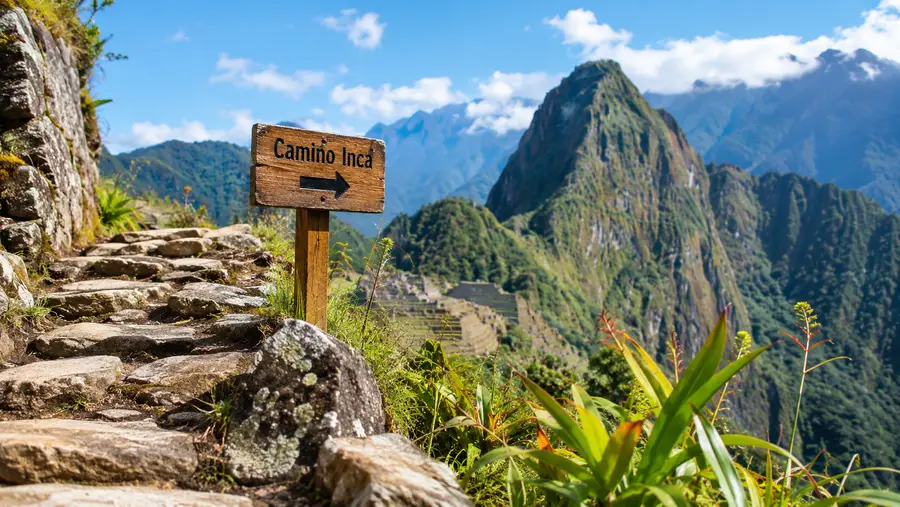
First-time hikers often do not realize that the four-day trek is not the only way to hike into the lost citadel. Several routes exist, each tailored to different stamina levels and time constraints. If the full trek feels daunting, the short Inca Trail 2 days bypasses the grueling second-day pass entirely, dropping you at Kilometer 104 for a single day of scenic climbing before reaching the Sun Gate by afternoon.
| Trek Option | Total Distance | Maximum Elevation | Sleeping Style | Beginner Suitability |
|---|---|---|---|---|
| Classic 4-Day | 44 km (27.3 miles) | 4,215 m (13,828 ft) | Camping in tents | Moderate fitness required |
| Short 2-Day | 12 km (7.5 miles) | 2,720 m (8,923 ft) | Hotel in Aguas Calientes | Excellent for true novices |
| Salkantay Trek | 74 km (46 miles) | 4,630 m (15,190 ft) | Domes or tents | Demanding, higher passes |
| Lares Trek | 37 km (23 miles) | 4,450 m (14,600 ft) | Camping or village stays | Gentle slopes, high altitude |
The classic trek remains the gold standard because of the continuous ruins along the original paved stone path. The shorter alternative skips the high passes and freezing nights, offering a comfortable hotel bed in Aguas Calientes before entering Machu Picchu. If you have joint issues or severe anxiety about high altitudes, the two-day trek provides the magic of arriving on foot without pushing your body past its breaking point.
Book your cusco inca trail experience:
Camp Life Realities for Beginners
Trekking companies in Peru pamper their clients far more than you would experience on backcountry trails in North America or Europe. Porters carry the heavy tents, dining furniture, propane tanks, and fresh food. You only carry a daypack containing your rain layers, water, camera, and basic personal items. When you arrive at camp after seven hours on your feet, your tent is already pitched and a bowl of warm water is waiting for you to wash your hands.
Meals on the trail are astonishingly elaborate. Camp chefs work wonders over two-burner camp stoves, producing three-course meals featuring hot quinoa soup, stuffed chicken breast, fried trout, and even fresh cakes baked in a pot. You will not be subsisting on freeze-dried mush from foil packets. For beginners nervous about mountain nutrition, the food is often the highlight of the entire trip.
Bathroom conditions, however, test your comfort zone. Campsites have public squat toilets maintained by park authorities. By late afternoon, after hundreds of hikers have passed through, these facilities can become wet, foul-smelling, and dark. Many mid-range and luxury operators now carry private chemical toilet tents for their groups. If you are squeamish about unsanitary bathrooms, paying an extra $80 for a tour company that supplies a private portable toilet is the best money you will ever spend.
Pro tip: Bring a small bottle of biodegradable liquid soap and keep it in your outer daypack pocket alongside a pack of tissue, because camp bathrooms never have soap or paper.
Nighttime temperatures surprise people. Because you are close to the equator, daytime temperatures can reach 22°C (72°F) under bright sunshine, causing you to hike in t-shirts. The moment the sun drops behind the granite peaks, temperatures plummet. At the Pacaymayo and Chaquicocha campsites, temperatures often drop to freezing. Beginners who pack flimsy cotton pajamas find themselves shivering in their sleeping bags until sunrise.
How Beginners Can Prepare Before Arriving in Peru
You do not need to hire an expensive personal trainer to get ready for this trip. The best way to prepare for walking up stairs is simply to walk up stairs. Elliptical machines and flat running tracks will build your lungs, but they do nothing to prepare your calves and knees for stone steps. Find a tall parking garage, an outdoor stadium, or a stair climber machine at your local gym and spend time stepping upward.
- Stair training with weight: Spend 45 minutes on a stair climber twice a week wearing your daypack loaded with about 5 kilos of books or water bottles.
- Downhill practice: Walk down steep dirt roads or find long downhill staircases, as your knee cartilage needs exposure to eccentric loads before the trek.
- Footwear break-in: Wear your hiking shoes on every training walk for at least two months to discover hot spots before they become trail blisters.
- Cardio intervals: Mix in brisk walking, swimming, or cycling to build your aerobic ceiling, which helps your heart work efficiently with less oxygen.
Mental preparation matters just as much as physical leg strength. There will be an hour on day two when your calf muscles cramp and rain is dripping down your neck. You will wonder why you spent two thousand dollars to suffer on a mountainside when you could have taken the train. Acknowledging ahead of time that parts of the trek will feel uncomfortable prevents you from panicking when the trail gets tough.
- Pace discipline: Hike at a conversation pace where you can speak complete sentences without gasping, ignoring hikers passing you.
- Layer management: Strip off jackets before you start sweating on climbs, and put layers back on the second you stop to prevent chills.
- Trekking pole technique: Use two poles adjusted so your elbows sit at ninety degrees, using your triceps to absorb twenty percent of every step.
- Blister intervention: Stop immediately to apply adhesive tape or blister pads the second you feel friction, rather than waiting until camp.
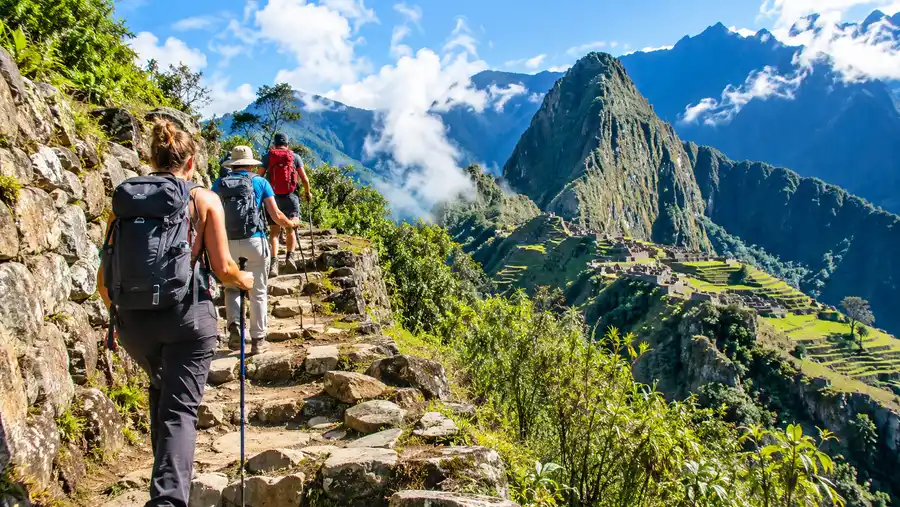
Poles make a colossal difference for beginners. Some travelers think poles look silly or feel like an admission of weakness. On the Inca Trail, poles are joint-savers. They catch your balance on wet granite and transfer thousands of pounds of impact away from your knees over the course of the descent. Make sure to buy rubber tips for them, as bare metal spikes are banned to protect the ancient stones.
Frequently Asked Questions about is the inca trail suitable for beginners
Can someone who does not exercise regularly hike the Inca Trail?
It is possible, but it will be an exhausting experience. Without a baseline of aerobic fitness and leg strength, day two will push you close to your limit. Spending eight weeks building up walking endurance before arriving makes the difference between enjoying the scenery and staring at your boots in agony.
What happens if a beginner cannot finish the trek?
There are no roads or rescue vehicles on the Inca Trail. If you fall ill on day one or the start of day two, porters can guide you back to Kilometer 82 on foot. Once you cross Dead Woman's Pass, the only way out is to walk forward, as mountain evacuation requires porters carrying you on a stretcher or an expensive emergency helicopter evacuation in life-threatening scenarios.
Are trail running shoes fine, or do beginners need heavy boots?
Sturdy trail running shoes work wonderfully if they have sticky Vibram or Contagrip outsoles. Heavy, stiff leather mountaineering boots are overkill and can cause deep blisters. Make sure whatever shoes you pick have enough room in the toe box so your toes do not bash against the front during steep downhill sections.
Is there an age limit for beginners hiking the trail?
There is no official upper age limit enforced by the Peruvian government. People in their sixties and seventies complete the trek every week. The youngest age allowed is usually around eight or twelve, depending on the operator, but personal fitness and heart health matter infinitely more than the date on your passport.
Quick Reference
- Total distance: 44 km (27 miles) across four days
- Highest point: 4,215 m (13,828 ft) at Dead Woman's Pass
- Acclimatization time needed: minimum 48 hours in Cusco
- Daily hiking time: 5 to 8 hours depending on pace
Book your cusco inca trail experience:
The Bottom Line for First-Timers
The trail is tough, but it is not reserved for elite mountaineers. Tens of thousands of regular office workers, retirees, and first-time campers stand at the Sun Gate every year, watching the morning mist peel off the granite terraces of Machu Picchu. You do not need to be an ironman competitor to conquer the trail. Give yourself three days to rest in Cusco, buy a pair of sturdy hiking poles, take slow rhythmic steps, and let the porters handle the heavy lifting. The ancient stones have supported millions of tired footsteps over five centuries, and they will support yours too.
Read more about cusco inca trail.