Short Inca Trail 2 Days Explained
Most people picture the classic multi-day trek when they think of hiking to Machu Picchu: freezing nights in wet tents, four days without a proper shower, and endless stone staircases climbing toward high mountain passes. The short inca trail 2 days offers an entirely different route. You skip the grueling high-altitude camps and bypass Dead Woman's Pass completely, but you still get to hike the most stunning stretch of original paved Inca stone, walk through the Sun Gate in the late afternoon, and sleep in a real bed with running hot water in Aguas Calientes.
I took this route on a drizzly Tuesday in October. My legs were tired by 3:00 PM, my knees felt the descent into the valley, and yet I avoided the deep exhaustion that ruins the citadel visit for so many long-distance hikers. If you are short on time, travelling with kids, or simply dislike sleeping on thin ground mats in freezing weather, this shorter version hits the sweet spot. It cuts out the logistical headache of a four-day expedition while preserving the magic of arriving at the ruins on foot.
Book your cusco inca trail experience:
What Exactly Is the 2 Day Short Inca Trail Hike?
The journey begins beside the roaring Urubamba River. The train from Ollantaytambo drops you off directly beside the tracks at a remote suspension bridge known as KM 104. There is no town here, just a small government checkpoint, a wooden footbridge hanging over churning brown water, and lush jungle climbing up vertical granite cliffs. You step off the metal steps of the train car, show your passport to the park rangers, and immediately enter the protected historical sanctuary.
You cover about 12 kilometers on foot during the first day. The trail winds upward past the sunlit terraces of Chachabamba before climbing through cloud forest draped in bromeliads and wild orchids. After four hours of steady climbing, you reach Wiñay Wayna, which might honestly be more impressive than Machu Picchu itself. The site clings to an emerald hillside with steep agricultural terraces that plunge toward the valley floor, fed by ancient stone water channels that still function after five centuries.
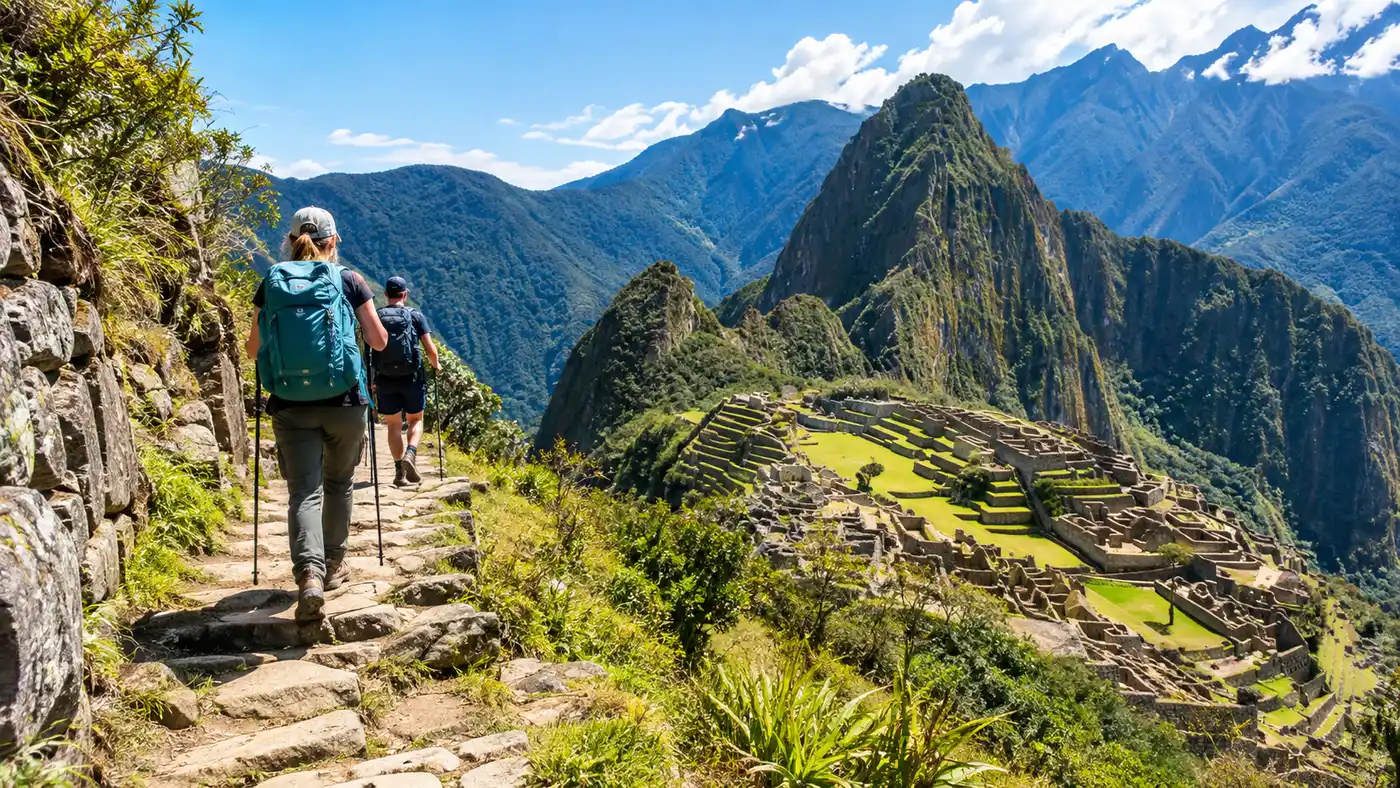
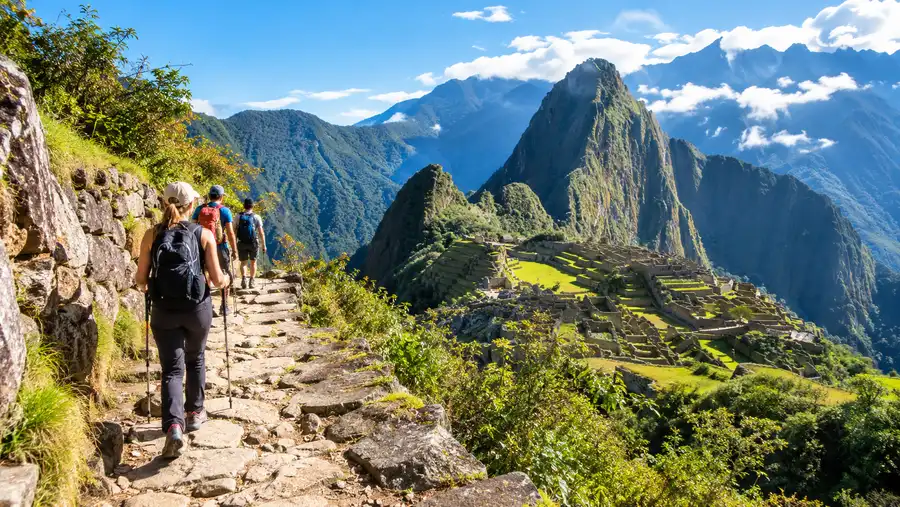
From Wiñay Wayna, an undulating path cut into the cliffside leads to Inti Punku, the Sun Gate. When you pass through that narrow stone portal, the entire citadel of Machu Picchu appears below you framed by mist and towering peaks. You do not tour the ruins on this first afternoon. Instead, you snap your photos while the day-tripper crowds leave, walk down to the main gates, and board a 25-minute shuttle bus down to the town of Aguas Calientes for dinner and a night in a hotel.
Note: You must carry your original physical passport throughout the entire trek. Park rangers at KM 104 check the physical document against your permit name and number, and digital copies on your phone are rejected immediately.
Day two is reserved entirely for exploring the citadel. You take an early bus back up the switchbacks from town, enter through the main turnstiles with your guide, and explore the plazas, temples, and residential quarters for two to three hours before taking the afternoon train back toward Cusco.
Day-by-Day Breakdown: How the Itinerary Works
The alarm goes off around 4:15 AM at your hotel in Cusco or Ollantaytambo. If you stay in Ollantaytambo, you get to sleep nearly two hours longer, which makes a huge difference to your energy levels. The morning train carries you along the canyon floor, following the bends of the river as the dry mountain terrain shifts rapidly into dense subtropical greenery.
Your guide signals when the train slows down near the 104-kilometer marker. The train does not pull into a station. It pauses on the open tracks for barely three minutes while hikers grab their daypacks and step down into the gravel. Across the suspension bridge, your guide handles the permit registration, and the hike begins on an exposed, sunny trail that climbs steadily away from the riverbank.
| Stage | Distance | Elevation Range | Average Time | Key Highlights |
|---|---|---|---|---|
| KM 104 to Chachabamba | 0.5 km | 2,170 m | 15 minutes | River crossing, checkpoint, small ceremonial site |
| Chachabamba to Wiñay Wayna | 8.5 km | 2,170 m to 2,650 m | 3.5 - 4.5 hours | Steep switchbacks, mountain views, waterfall, orchid trails |
| Wiñay Wayna to Sun Gate | 2.0 km | 2,650 m to 2,720 m | 1 - 1.5 hours | Stone steps, Gringo Killer staircase, first citadel overlook |
| Sun Gate to Machu Picchu Gates | 1.5 km | 2,720 m to 2,430 m | 45 minutes | Gentle downhill trail, classic upper terrace views |
| Aguas Calientes to Citadel (Day 2) | By bus | 2,040 m to 2,430 m | 25 minutes | Full guided tour of Circuit 1, 2, or 3 |
Lunch happens near Wiñay Wayna around 1:00 PM. Most agencies provide a box lunch containing quinoa salad, a cold chicken cutlet or boiled eggs, fresh fruit, and local chocolate. You eat at covered wooden tables listening to birds call across the canyon. The break recharges your legs right before the final push toward the Sun Gate.
The afternoon walk from the Sun Gate down toward the bus stop feels surreal. The day tourists who arrived by train from Cusco are already heading down to town, so the upper terraces around the Guardhouse are quiet. You get those classic postcard views without hundreds of colorful rain jackets cluttering your pictures. You board the switchback bus down to Aguas Calientes, check into your room, take a hot shower, and grab a cold Cusqueña beer at a wood-fired pizza restaurant on the main drag.
Physical Difficulty and Trail Conditions
Do not let the short timeline fool you into thinking this is a casual stroll in the park. The first four hours involve continuous, unrelenting uphill walking over uneven stone steps and dirt trails exposed to direct tropical sun. If it rains, those ancient stones turn slick as ice.
The trail gains roughly 550 vertical meters between the riverbank and Wiñay Wayna. If you want a deeper look at physical readiness across different trail routes, read up on how hard is the Inca trail before you finalize your travel plans. The absolute hardest stretch of the day arrives just before Inti Punku. The infamous "Gringo Killer" staircase consists of 53 nearly vertical stone steps carved directly into the mountain face. You will likely climb them using both hands and feet, heart pounding in your throat, sweat dripping off your chin. It lasts only ten minutes, but those ten minutes feel very real.
Pro tip: Pack two pairs of wool hiking socks in your daypack. Tropical storms roll in quickly around midday, and changing into bone-dry socks before tackling the final stretch to the Sun Gate prevents painful blisters.
Altitude affects people unpredictably. The good news here is that the highest point of the 2 day short inca trail hike sits at 2,720 meters above sea level at the Sun Gate. That is significantly lower than Cusco, which sits at 3,400 meters. If you spent two nights in Cusco or the Sacred Valley beforehand, your lungs will actually feel clearer on this trail than they did walking up the cobblestones of the San Blas neighborhood.
Water management matters on this route. Humidity is high, and the steep climbing drains your fluids rapidly. You need at least two liters of water for the day, and because single-use plastic bottles are prohibited by park regulations, you must bring a reusable hydration bladder or sturdy metal canteen.
Book your cusco inca trail experience:
What to Pack for the 2 Day Short Inca Trail Hike
Because you are staying in a hotel overnight rather than camping in tents, your gear needs are simple. You carry your own small daypack containing everything you need for the trail and your overnight stay in Aguas Calientes. Porters do not accompany the two-day trek unless you hire a private one at significant extra cost, so keeping pack weight under six kilograms is essential for your comfort.
- Footwear: Broken-in hiking shoes or trail runners with aggressive rubber lugs for slick granite steps.
- Outer layer: A lightweight, breathable waterproof rain jacket, as afternoon cloudbursts happen year-round.
- Sun protection: A wide-brim hat, polarized sunglasses, and broad-spectrum sunscreen for the exposed lower switchbacks.
- Insect defense: Bug repellent containing at least 20 percent DEET to ward off the biting gnats near the riverbank.
- Overnight essentials: One change of casual clothes, clean underwear, basic toiletries, and a phone charger for the hotel.
- Cash reserves: About 150 to 200 Peruvian Soles in small bills for bus snacks, tipping your guide, and bathroom fees.
I made the mistake of carrying a heavy external battery pack and three lenses for my camera. By hour three, every unnecessary gram felt like lead on my shoulders. Stick to the basics. If you are comparing gear requirements with the longer wilderness route, check our complete breakdown on what to wear on the Inca trail to see how clothing choices differ when you have a roof over your head at night.
Permits, Regulations, and Booking Realities
The Peruvian Ministry of Culture strictly controls trail access. Only 250 permits are issued per day for the short route, a number that includes licensed guides, assistants, and trekking staff. While this sounds like a decent amount, permits sell out months in advance for the peak dry season running from May through September.
You cannot hike this path independently. Regulations require every traveler to be accompanied by a licensed tour guide registered with the Machu Picchu conservation authority. Small group tours typically include between four and eight hikers, which keeps the experience personal and avoids the chaotic cattle-herd feel of budget bus tours.
Choosing where to sleep the night before your trek influences your experience dramatically. Staying in Ollantaytambo saves you from a brutally early 3:30 AM private van ride out of Cusco. Ollantaytambo sits at 2,792 meters, which also aids your body in adapting to the elevation before you hit the trail. The train station is right in town, allowing you to walk to the platform at 6:30 AM after a calm breakfast at a local café.
When you finish your citadel tour on the second afternoon, the return journey retraces your steps back along the railway. You catch the PeruRail or Inca Rail train from Aguas Calientes back to Ollantaytambo, followed by an agency shuttle back to your hotel in Cusco. You will arrive back in the city around 7:30 PM, exhausted, dusty, and completely thrilled with what you just accomplished.
Frequently Asked Questions about short inca trail 2 days
Can children do the 2 day short inca trail hike?
Yes, active kids aged eight and older generally handle the trail well if they have some hill-walking experience. The first four hours are steep, so they must be willing to walk continuously without being carried.
Do I need hiking poles for this route?
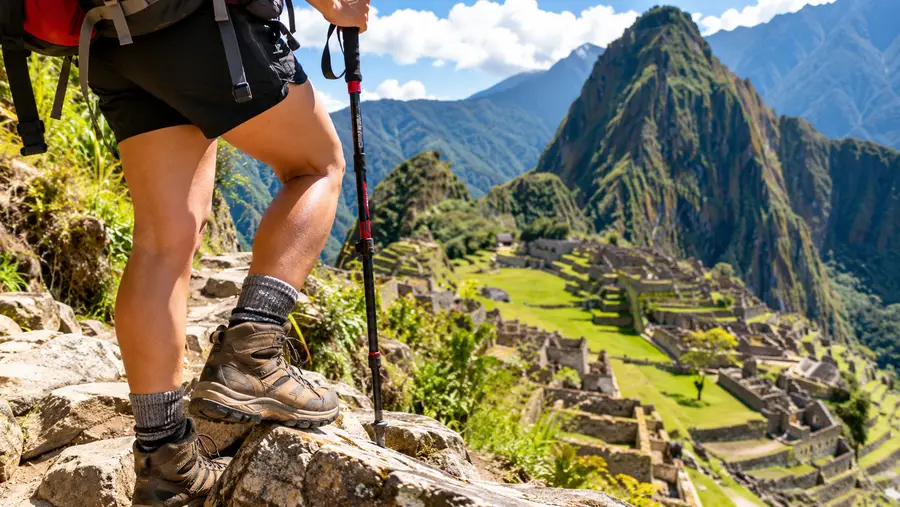
Trekking poles help save your knees during the steep climb and the descent past the Sun Gate. Remember that metal tips are forbidden on the trail; you must have rubber protective caps on the ends of your poles at all times.
What happens to my main luggage during the hike?
Your large suitcases or duffels remain in storage at your hotel in Cusco or Ollantaytambo free of charge. You only hike with a small 20 to 30-liter daypack containing your clothes and gear for the overnight stay.
Quick Reference
- Total hiking distance: 12 km / 7.5 miles
- Highest elevation reached: 2,720 m (Sun Gate)
- Difficulty level: Moderate to challenging uphill
- Accommodation: Hotel in Aguas Calientes
- Permit quota: 250 hikers per day
Book your cusco inca trail experience:
Is It Worth It?
If you want the soul-stirring reward of walking through the Sun Gate to catch your first glimpse of the ancient citadel without the grit, cold camps, and physical punishment of the longer route, this trek delivers on every front. You taste the mist of the cloud forest, trace stone steps laid down by imperial builders centuries ago, and still fall asleep in clean sheets after a hot shower. Talk to a reputable local operator, secure your permits five or six months ahead, and leave the bulky expedition gear behind.
Read more about cusco inca trail.