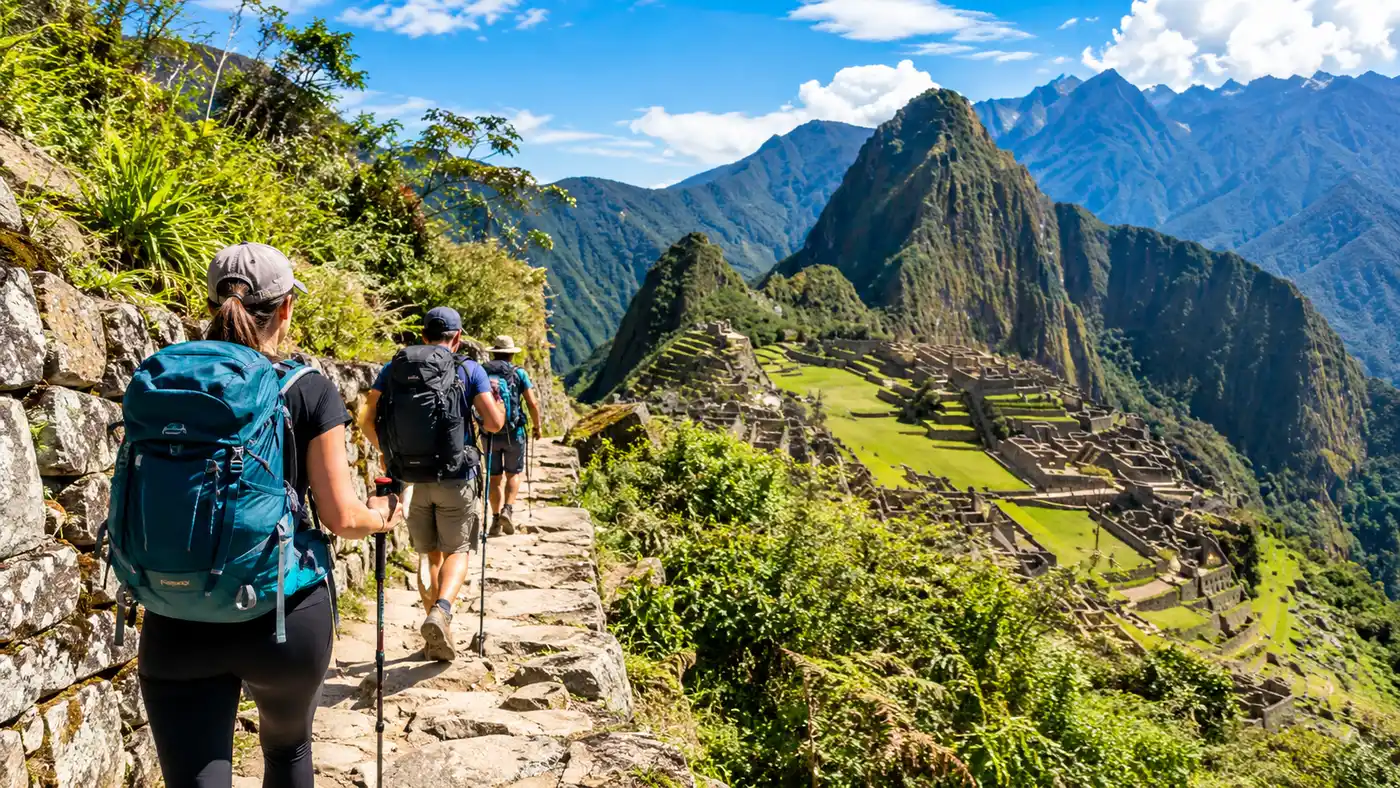
What Is the Inca Trail
Most people think it is just a footpath through the Andes leading to a famous ruin. When you stand at Kilometer 82 in the Sacred Valley with morning mist hanging over the rushing Urubamba River, you realize quickly that understanding the history of inca trail engineering changes how your boots hit every single stone slab. It was never meant to be a simple transit route for traders or farmers. The trail was laid out as an exclusive, ceremonial approach to an imperial sanctuary, carved directly into vertical granite walls five centuries ago.
To understand what is the Inca Trail today, you have to peel back several layers of time. You have the modern 43-kilometer trekking route that tests your quadriceps, the legendary Qhapaq Ñan empire road system spanning thousands of leagues across South America, and the spiritual corridor built by the ninth Inca emperor. If you are preparing to walk it, or even if you are just curious why a narrow mountain track captivates so many people worldwide, digging into the past transforms the experience from a physical slog into an unforgettable journey.
Book your cusco inca trail experience:
The Royal Highway: History of Inca Trail Networks in the Andes
The path people walk today is merely a tiny fragment of a massive continental highway network. During the 15th century, the Inca Empire constructed the Qhapaq Ñan, an astonishing network stretching over 40,000 kilometers from modern Colombia down through Ecuador, Peru, Bolivia, and into central Chile and Argentina. These were not primitive dirt ruts. The Incas lacked horses, wheeled vehicles, and iron tools, yet they built paved roads, suspended rope bridges across roaring gorges, and cut staircases directly into sheer cliff faces that resisted earthquakes better than modern asphalt.
Within this vast continental web, the specific mountain path winding into Machu Picchu held a distinct rank. It served as a private royal causeway. Commoners were forbidden from treading on these stones without explicit imperial permission. Relay runners known as chasquis sprinted along these paved ridges in short intervals, carrying fresh seafood from the Pacific coast to royal tables in Cusco in less than two days, passing messages encoded on knotted cords called quipus. For an in-depth breakdown of how travelers navigate this classic route today, take a look at our classic Inca Trail 4 days itinerary.
The stone pavers you step on were quarried on-site using harder river rocks as hammers. Looking closely at the drainage channels running beside the steps, you can see how master stonemasons directed glacial meltwater away from the sub-base. That precision is why large sections survived centuries of torrential Andean downpours without washing into the valleys below.
Note: Trekking permits are strictly limited by the Peruvian Ministry of Culture to 500 people per day, and roughly 300 of those spots go directly to porters and guides, leaving only 200 for independent hikers.
Sacred Geography and the Religious History of the Inca Trail
Why build a road through such treacherous mountain passes when an easier path along the valley floor was already available? The answer lies in Inca cosmology. To the Incas, towering snow-capped peaks were not scenery. They were apus, living sacred spirits possessing power over rain, harvest, and life. By ascending through high passes like Dead Woman's Pass at 4,215 meters above sea level, travelers physically purified themselves before entering sacred space.
Every stone gateway along the path acted as a checkpoint for both security and spiritual readiness. Emperors like Pachacuti, who commissioned the construction of Machu Picchu around 1450, traveled this trail with a massive retinue of priests, musicians, and soldiers. The journey was an elaborate pilgrimage. The trail ascends out of dry scrub forests, enters barren sub-alpine winds, plunges down into mossy cloud forests, and finally emerges at Inti Punku, the Sun Gate. This dramatic shifting of ecological zones was designed to inspire awe.
Religious structures along the way mirror this reverence for the landscape. Shrines carved into bedrock show that builders did not conquer nature; they collaborated with it. When you hike it, you quickly notice that water fountains, ritual baths, and astronomical viewing platforms appear at regular intervals along the route. If you want to see how these landmarks connect to the wider sanctuary, our Inca Trail to Machu Picchu complete overview explains the broader topography in detail.
Key Archaeological Wonders Along the Trail
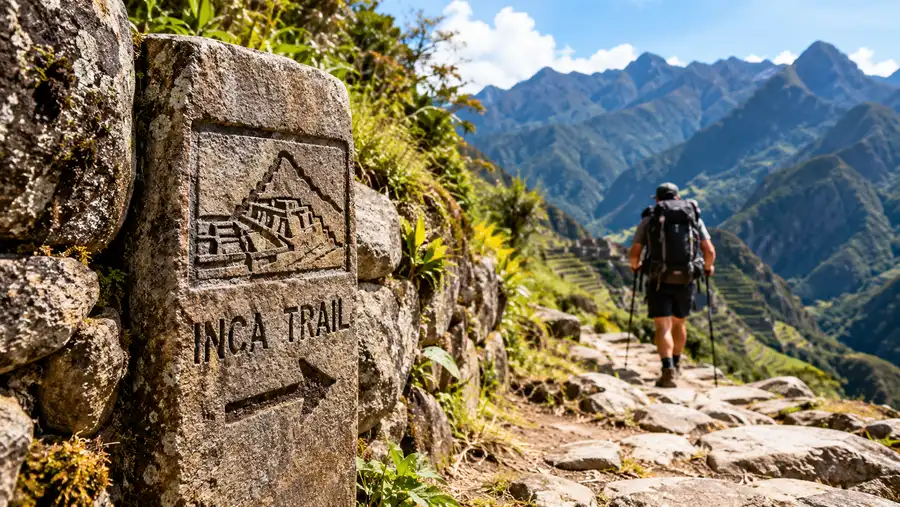
Hikers often focus solely on the final destination, but the archaeological sites leading up to Machu Picchu are world-class attractions on their own. Each outpost along the mountain ridgelines served a unique civic or spiritual function during the height of the Tawantinsuyu empire.
| Site Name | Approximate Altitude | Primary Historical Function | Key Architectural Feature |
|---|---|---|---|
| Patallacta | 2,750 m (9,022 ft) | Agricultural support town and granary | Upper hillside terraces and residential quarters |
| Runkurakay | 3,760 m (12,335 ft) | Sentry post and traveler rest station (tambo) | Rare semi-circular stone watchtower |
| Sayacmarca | 3,600 m (11,811 ft) | Fortified ceremonial complex and observatory | Sheer cliff staircase and ritual water baths |
| Phuyupatamarca | 3,670 m (12,040 ft) | Ritual bath complex and ceremonial platform | Five linked fountains carved in living granite |
| Wiñay Wayna | 2,650 m (8,694 ft) | Agricultural estate and religious sanctuary | Curved agricultural terraces over the Urubamba |
Sayacmarca, which translates to "Inaccessible Town" in Quechua, shows just how defensive these outposts could be. Perched atop a razor-thin rock spur, access was possible only through a single narrow stone staircase built straight against an abyss. Archaeologists believe it served as a control point where guards checked incoming pilgrims. Walking up those worn stairs makes your heart hammer, partly from the thin mountain air, and partly from looking straight down into the jungle below.
Wiñay Wayna, meaning "Forever Young," is the crown jewel of the trek before reaching the Sun Gate. It clings to a sheer hillside, complete with residential buildings, religious towers, and a cascade of agricultural terraces. The pink orchids growing wild along its walls give it an ethereal atmosphere that rivals Machu Picchu itself, especially in late afternoon light when tour groups quiet down.
Pro tip: Bring a small headlamp with extra lithium batteries for exploring the unlit stone tunnels carved through solid rock between Phuyupatamarca and Wiñay Wayna.
Book your cusco inca trail experience:
From Hiram Bingham to Today: Modern Inca Trail History
When Spanish conquistadors under Francisco Pizarro toppled Cusco in the 1530s, the Incas systematically destroyed key bridges and erased access points to protect their secret royal estates. The cloud forest swallowed the trail. For nearly 400 years, bamboo, moss, and twisting vines wrapped around the stone masonry, hiding the royal road from European eyes.
Local Quechua-speaking farmers always knew the ruins were out there, grazing cattle among the terraces. In July 1911, an American academic named Hiram Bingham III was led to the ruins of Machu Picchu by local farmer Melchor Arteaga. Bingham returned on subsequent expeditions funded by Yale University and the National Geographic Society, clearing heavy vegetation off the ancient paths and documenting the extensive network of outposts. His writings in the early 20th century introduced Peru the Inca trail experience to the global imagination.
By the 1970s and 1980s, backpackers began trekking the path without regulation, camping wherever they pleased, building campfires against ancient walls, and leaving piles of waste. The Peruvian government stepped in during the late 1990s. In 2001, sweeping regulations took effect. The state banned independent hiking, established mandatory licensed guides, set porter welfare standards, and capped entry permits at 500 daily visitors to preserve the stones from erosion.
Essential Inca Trail Facts and Structural Ingenuity
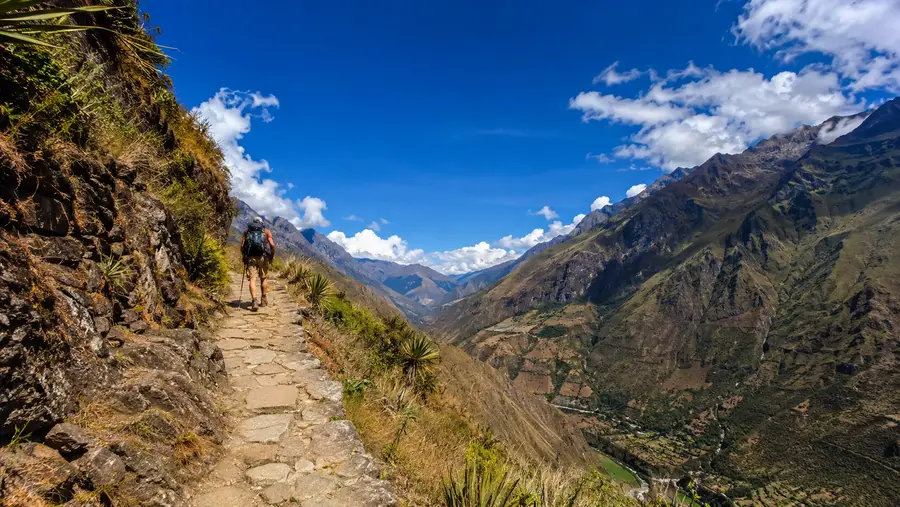
Understanding the engineering marvel behind this path deepens your appreciation for every stone beneath your feet. What looks like simple paving is an intricate civil works system designed to survive earthquakes and torrential monsoon rains.
- Drainage systems: Inca builders laid down foundation layers of coarse gravel, crushed rock, and fine sand beneath the top paving stones, preventing water from pooling and undermining the path.
- Cantilevered cliff steps: In sections where vertical cliffs dropped straight down into chasms, builders jammed thick wooden beams and flat granite slabs deep into bedrock fissures to support floating stone paths.
- Retaining walls: Some terrace retaining walls lean backward at a deliberate seven-degree angle, an architectural trick that absorbs seismic shocks during Andean tremors.
- Water supply chains: Natural mountain springs were diverted through carved stone channels into running baths so travelers could wash their hands and feet before entering holy grounds.
Daily life on the trail has evolved dramatically. Modern hikers carry light daypacks with water, a rain shell, and maybe some blister tape, while local indigenous porters carry 20-kilogram duffels holding tents, sleeping mats, and mobile kitchen gear. Watching a porter speed past you in rubber sandals while you struggle for breath at 3,800 meters is an intensely humbling moment. It reminds you that the bloodline of the builders still thrives across these highland valleys.
- Length of classic route: roughly 43 kilometers (26.7 miles), usually walked across four days and three nights of camping.
- Highest elevation reached: Dead Woman's Pass (Warmiwañusqa) at 4,215 meters (13,828 feet), where oxygen levels drop to about 60 percent of sea level.
- Flora and fauna variety: home to over 400 orchid species, hummingbirds, spectacled bears, and the vibrant orange Andean cock-of-the-rock.
- Annual conservation closure: the entire trail shuts down for every day of February so conservation teams can clear drainage channels, repair stone steps, and allow the environment to regenerate.
Frequently Asked Questions about history of inca trail
Why did the Spanish never find the Inca Trail to Machu Picchu?
The retreating Incas deliberately destroyed key bridges and scorched river crossings when Manco Inca fled into the Vilcabamba jungle. Without access across the roaring Urubamba River, the Spanish were unable to discover the steep royal pathway hidden under thick cloud forest canopy.
When was the Inca Trail actually built?
Archaeologists date the construction of the trail and its connecting outposts to the mid-15th century, roughly between 1438 and 1471, during the reign of Emperor Pachacuti, who founded the imperial sanctuary of Machu Picchu.
Who was allowed to use the Inca Trail historically?
The trail was not an open public trade highway. It was an elite, ceremonial passage reserved strictly for royalty, high priests, state messengers, and government officials on imperial business. Common subjects caught walking it without permission faced severe capital punishment.
Quick Reference
- Total classic distance: 43 km (26.7 miles)
- Highest mountain pass: 4,215 meters
- Built around: 1450 CE under Pachacuti
- Daily trail limit: 500 total permits
Book your cusco inca trail experience:
The Bottom Line
Walking this path is far more than an athletic milestone to cross off your bucket list. Every stone you climb was shaped by hand, hauled without draft animals, and laid down to honor sacred mountain peaks and ancient deities. When you finally reach the crest of the Sun Gate at dawn and watch the early morning sunlight hit the stone terraces of Machu Picchu, the ache in your legs disappears, replaced by a quiet awe for the civilization that carved this royal masterpiece out of raw Andean granite.
Read more about cusco inca trail.