Inca Trail Altitude Highest Point
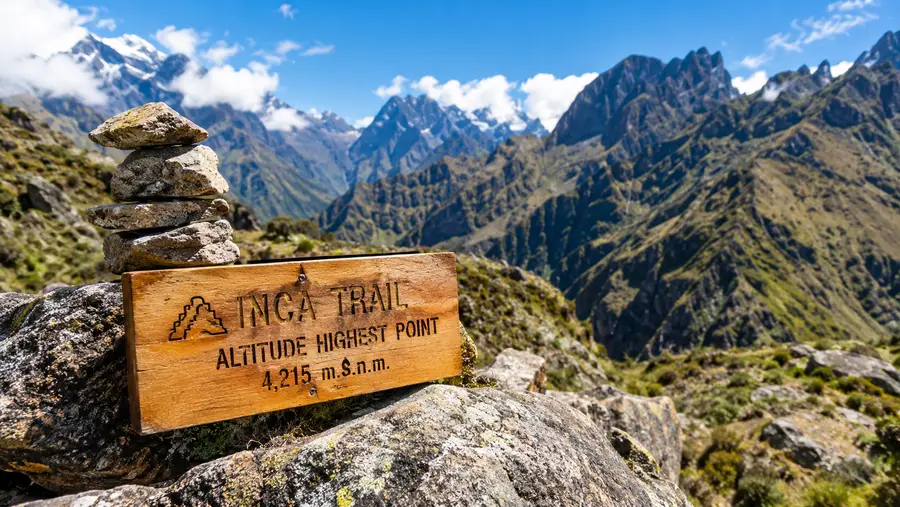
Before you commit to four days of stone stairs through the Peruvian Andes, you almost certainly want to know how high is inca trail in real numbers. The straightforward answer is that you will climb from the valley floor up to a dizzying 4,215 meters (13,828 feet) above sea level. That top notch is higher than any peak in the Rocky Mountains outside of Colorado, and you get there entirely on foot while carrying your own daypack.
Most hikers worry endlessly about their knees or whether they will sleep well in a cold tent. In reality, thin mountain air dictates how your trip unfolds. The elevation profile looks like an exaggerated jagged tooth, dropping into damp valleys before thrusting straight up into alpine scrub. Once you understand the specific peaks, the day-by-day elevation gain, and where your lungs will actually scream for oxygen, the whole trek feels far less intimidating.
Book your cusco inca trail experience:
Dead Woman's Pass: The Highest Point on the Inca Trail
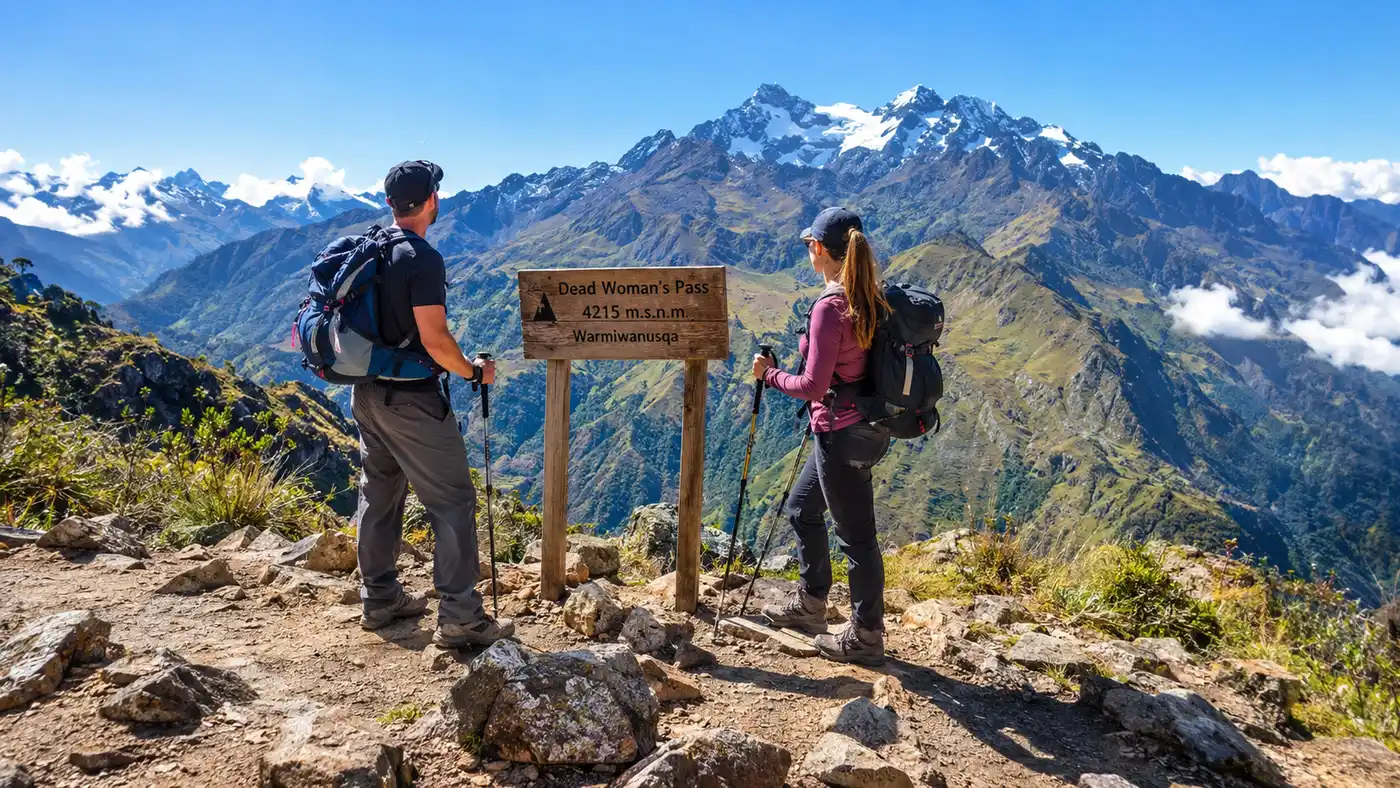
You hit the highest point on the Inca Trail on the morning of your second day. The Quechua name for this wind-scoured saddle is Warmiwañusqa, which translates literally to Dead Woman's Pass. Local lore says the crest resembles the silhouette of a woman lying back against the skyline. When you stare up at it from the Llulluchapampa meadow roughly 400 meters below, it simply looks like a sheer wall of grey slate and yellow bunchgrass.
Reaching that notch at 4,215 meters requires a relentless climb. You step up thousands of irregular Inca stones, some worn slick by rain and centuries of llama hooves. The air up there holds roughly 40 percent less effective oxygen per breath than sea level. Your heart pounds in your throat. You might take twelve slow steps, pause on a boulder, gasp until your pulse settles, and then take twelve more. It took our group nearly four hours of steady ascending from our morning camp to touch the wooden sign at the pass.
Pro tip: Pack two clean pairs of dry socks inside a plastic sandwich bag in your daypack for Dead Woman's Pass. Sweating through the morning climb leaves your feet damp, and the icy wind whistling through the high saddle drops the temperature to freezing within minutes.
The top itself is surprisingly exposed. Clouds tear across the ridge at breakneck speed, alternating between blinding whiteout fog and shocking vistas of snow-capped Vilcabamba peaks. Trekkers drop their packs, hug each other, and snap quick photos before the bitter wind forces them down the opposite side. The descent is punishing on the quads, dropping nearly 700 vertical meters into the cloud forest of the Pacaymayo valley on steep stone staircases.
Inca Trail Elevation Gain by Day: The Complete Profile
Understanding the trail means realizing you do not simply climb to the top and coast down to the ruins. The classic Inca Trail elevation gain follows an agonizing rhythm of climbing high, dropping low to sleep, and immediately climbing back up over another pass. If you want to dive deeper into the physical demands, check our breakdown of Inca Trail elevation gain explained, but the core numbers tell an honest story.
Day one eases you in gently. You start at Piscacucho, better known as Kilometer 82, sitting at an approachable 2,600 meters (8,530 feet). The path rolls along the Urubamba River with modest undulations before a gradual late-afternoon climb toward Wayllabamba. Day two is the infamous slog, demanding over 1,200 meters of vertical ascent straight to Warmiwañusqa before plummeting down to camp. Many hikers assume the third day offers relief, but it actually features two distinct passes: Runkurakay at 3,950 meters and Phuyupatamarca at 3,680 meters.
| Day / Stage | Starting Elevation | Max Trail Elevation | Camp Elevation | Distance |
|---|---|---|---|---|
| Day 1: KM 82 to Wayllabamba | 2,600 m (8,530 ft) | 3,000 m (9,842 ft) | 3,000 m (9,842 ft) | 12 km (7.5 mi) |
| Day 2: Wayllabamba to Pacaymayo | 3,000 m (9,842 ft) | 4,215 m (13,828 ft) | 3,600 m (11,811 ft) | 11 km (6.8 mi) |
| Day 3: Pacaymayo to Wiñay Wayna | 3,600 m (11,811 ft) | 3,950 m (12,959 ft) | 2,680 m (8,792 ft) | 16 km (9.9 mi) |
| Day 4: Wiñay Wayna to Machu Picchu | 2,680 m (8,792 ft) | 2,720 m (8,923 ft) | 2,430 m (7,972 ft) | 5 km (3.1 mi) |
By the time you wake up at Wiñay Wayna on the final morning, you are already lower than Cusco. Reaching the Sun Gate (Inti Punku) requires one last burst of energy up fifty nearly vertical stairs known as the Gringo Killer, perched at 2,720 meters. From there, you drift downhill into Machu Picchu itself, which sits comfortably down in the subtropical forest at 2,430 meters (7,972 feet).
Altitude Sickness and How Your Lungs Cope
Nobody is entirely immune to acute mountain sickness (AMS). Your physical fitness level back home has shockingly little to do with whether altitude knocks you flat. Marathon runners sometimes crumple with throbbing migraines, while unhurried middle-aged hikers amble up the stone steps without an issue. The biological trigger is simple barometric pressure. The air molecules scatter, your blood oxygen saturation drops from its usual 98 percent down into the 80s, and your brain swells slightly if forced to climb too quickly.
Cusco sits at roughly 3,400 meters (11,152 feet). If you fly straight from Lima at sea level directly into Cusco and hike the next morning, you are almost guaranteed misery. Spending three nights wandering around Cusco, or even better, sleeping down in the lower Sacred Valley towns of Pisac or Ollantaytambo around 2,800 meters, lets your kidneys dump bicarbonate and trigger red blood cell production.
Note: If you develop a relentless pounding headache that Ibuprofen cannot touch, paired with persistent vomiting or an unsteady walking gait, you must tell your guide immediately. You cannot sleep off severe altitude sickness at 3,600 meters; descending to a lower camp is the only real cure.
I find drinking warm muña (Andean mint) tea far gentler on a raw stomach than traditional coca tea, though coca leaves work wonders for mild morning nausea. Local porters chew a wad of leaves with a pinch of catalytic lime paste while hauling sixty-pound packs up the grade. Modern pharmaceuticals like Diamox (acetazolamide) speed acclimatization significantly by acidifying the blood, but they make your fingers tingle and force you to pee at 2:00 AM in the freezing rain.
Book your cusco inca trail experience:
Short Inca Trail vs. Classic: Comparing Altitudes
Travelers who lack four days or feel terrified by high mountain passes often choose the shorter alternative. The two-day version completely skips the high alpine terrain of Dead Woman's Pass and Runkurakay. It starts much further down the Urubamba valley at Kilometer 104, sitting at an elevation of 2,170 meters (7,119 feet).
From KM 104, you climb up past the spectacular ruins of Chachabamba toward Wiñay Wayna. The highest point you reach on that route is Inti Punku at roughly 2,720 meters. That means you stay well below the 3,000-meter threshold where acute mountain sickness usually attacks human bodies. To read about trail logistics and physical demands on the legs, see how hard is the Inca Trail across various seasonal conditions.
Here is what separates the physical altitude experience between the two routes:
- Maximum elevation: the classic trail peaks at 4,215 meters while the short trail caps out at 2,720 meters.
- Sub-zero overnight chills: classic camps like Pacaymayo sit above 3,600 meters where night frost is common, whereas short trail hikers stay in a warm Aguas Calientes hotel at 2,040 meters.
- Acclimatization requirement: the four-day trek demands at least 48 to 72 hours of prep time in Cusco, while the two-day trek can safely be tackled with far less advance rest.
- Vegetation and scenery: the short route remains in lush cloud forest, missing the stark, barren puna ecosystems found above 4,000 meters.
Practical Tactics for Conquering the Altitude
Reaching the high passes requires pacing rather than raw muscle power. Most hikers fail because they rush out of camp following the porters at a standard sea-level walking pace. Ten minutes in, their lungs catch fire. The secret used by seasoned mountaineers is the rhythmic pressure step. You plant your heel, lock your rear knee for a fraction of a second to transfer weight onto the bone structure, and inhale deeply before taking the next stride.
Hydration also plays a bizarre role at altitude. Mountain air contains almost zero moisture, so you lose hydration simply by breathing hard. You should be drinking roughly four liters of water per day, mixing in electrolyte tablets so you do not flush all sodium from your system.
Keep these baseline rules in mind as you pack your gear and plan your itinerary:
- Lock in rest days: schedule a minimum of two full calendar days in Cusco or the Sacred Valley before your trek start date.
- Carry quality trekking poles: rubber-tipped poles save your knees during the brutal 700-meter drop into Pacaymayo.
- Avoid heavy alcohol: pisco sours dehydrate muscle tissue and disrupt sleep cycles when your body is already oxygen-deprived.
- Layer against rapid shifts: strip off fleece jackets before you begin sweating on steep climbs to prevent hypothermia when the wind hits.
Honestly, standing on the high pass after hours of struggle changes your relationship with the mountains. You can smell the wet earth, feel the thin, biting wind on your cheeks, and look down on ancient granite paths that have survived half a millennium. The altitude makes you work for every single foot of that view, which is why finally seeing Machu Picchu through the Sun Gate feels so profoundly earned.
Frequently Asked Questions about how high is inca trail
What is the highest point on the Inca Trail?
The highest point is Dead Woman's Pass, known locally as Warmiwañusqa, which reaches an elevation of 4,215 meters (13,828 feet) above sea level on day two of the classic trek.
How high is Machu Picchu compared to the Inca Trail?
Machu Picchu sits at 2,430 meters (7,972 feet), which is significantly lower than Cusco and nearly 1,800 meters lower than the highest mountain pass on the trail itself.
Will I get altitude sickness on the Inca Trail?
Most hikers feel short of breath, experience mild headaches, or tire quickly on the ascents. Severe altitude sickness is avoidable if you spend two or three days acclimatizing in Cusco before starting the hike.
What is the second highest pass on the route?
Runkurakay Pass is the second highest point on the classic four-day route, reaching an altitude of 3,950 meters (12,959 feet) during the morning of day three.
Quick Reference
- Dead Woman's Pass: 4,215 m (13,828 ft)
- Runkurakay Pass: 3,950 m (12,959 ft)
- Machu Picchu Citadel: 2,430 m (7,972 ft)
- Total high passes crossed: 2 above 3,900 m
Book your cusco inca trail experience:
The Bottom Line
Understanding how high the trail climbs allows you to respect the terrain without letting fear keep you at home. If you give your body ample time to adjust in Cusco, drink clean water constantly, and take the stone stairs one slow breath at a time, Dead Woman's Pass will be the triumph of your trip rather than an ordeal. Pack your warmest layers, get your boots broken in early, and embrace the climb.
Read more about cusco inca trail.